Construction projects involve more than building, excavating, or demolishing. They also require moving large quantities of materials from one place to another.
You may need sand and gravel delivered for site preparation, soil transported for backfilling, or piles of excavated earth and construction debris removed before work can continue. When you’re dealing with materials in bulk, hiring a dump truck can make the process much more efficient.
Dump trucks are designed to transport loose, heavy, and bulk materials commonly found on construction sites. They can support residential, commercial, infrastructure, demolition, excavation, roadwork, and landscaping projects throughout the Philippines.
But what materials can you actually transport using a dump truck?
Below, we’ll discuss some of the most common materials we can haul, along with important considerations when arranging dump truck services for your construction project.
Key Takeaways
- Dump trucks can transport many common construction materials, including soil, sand, gravel, aggregates, rocks, concrete debris, asphalt debris, and other approved non-hazardous construction materials.
- Dump truck services can be used for both material delivery and hauling unwanted materials away from a project site.
- The amount a truck can legally carry depends on the vehicle, material weight, axle configuration, and applicable Philippine vehicle weight limits.
- Wet soil, concrete, rocks, and aggregates can reach a truck’s allowable weight before its dump body is completely full.
- Construction debris should be transported to an appropriate receiving, recycling, processing, or disposal facility rather than dumped at an unauthorized location.
- Hazardous or regulated wastes require special handling and should not be treated as ordinary construction debris.
- Site access, loading conditions, road restrictions, and local government requirements should be checked before scheduling a hauling job.
What Is a Dump Truck Used For?
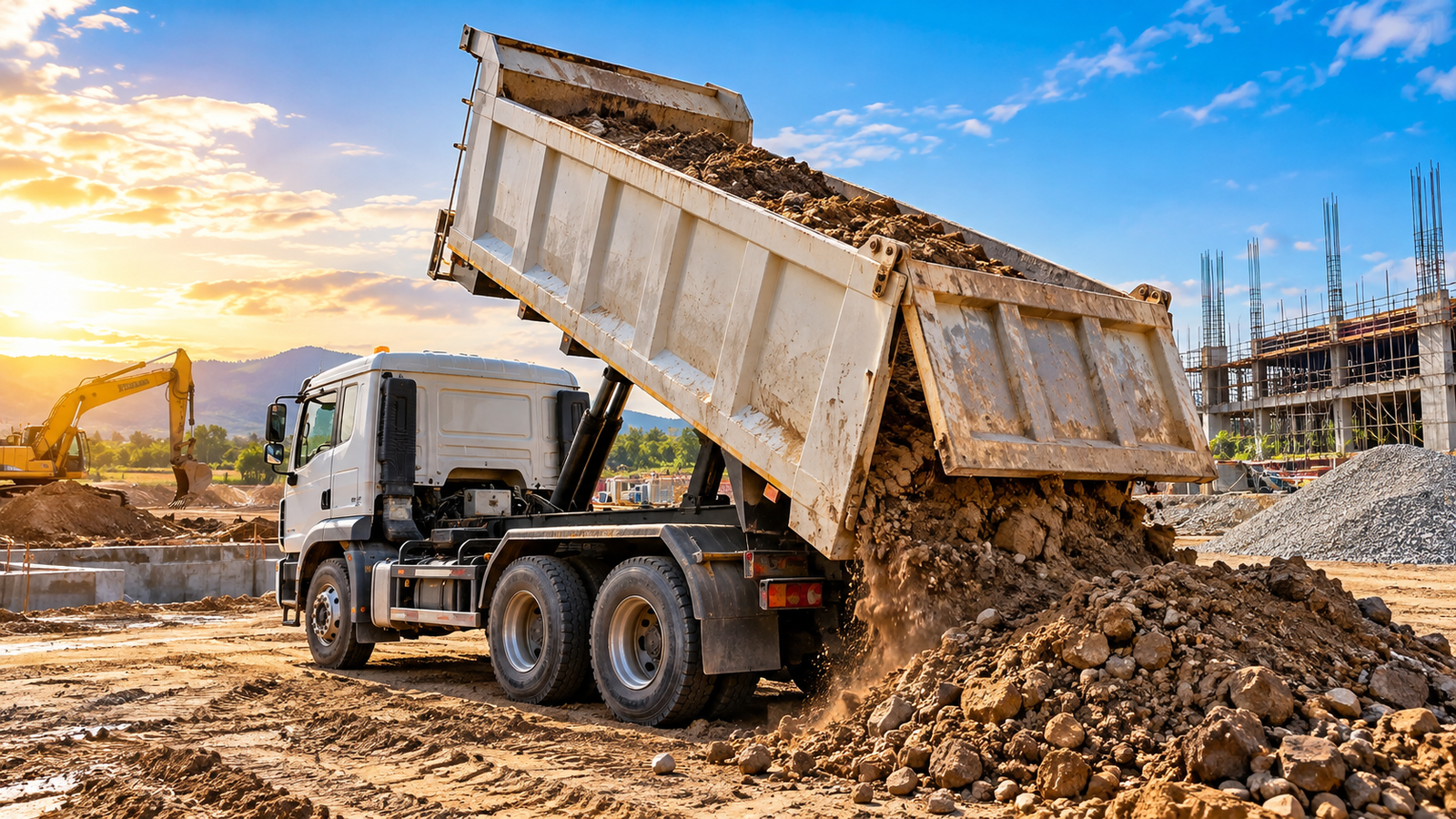
A dump truck is designed primarily for transporting loose and bulk materials. Its open-box bed can be raised hydraulically, allowing material to be unloaded efficiently at the destination.
This makes dump trucks particularly useful for construction projects where substantial quantities of material need to be moved.
Depending on the project and the services available, a dump truck can be used to bring materials to the construction site, remove materials from the site, or handle both.
For example, excavation for a building foundation may produce a large quantity of soil that needs to be hauled away. Once excavation is complete, trucks may then be needed to deliver gravel, aggregates, or other materials for the next stage of construction.
🚚 How to Choose the Right Dump Truck Hauling Service in the Philippines
What Materials Can We Haul With a Dump Truck?
The materials that can be transported depend on the truck, the condition and weight of the material, road and site conditions, applicable regulations, and the requirements of the receiving or disposal facility.
For most construction projects in the Philippines, the following are among the materials commonly transported by dump trucks.
1. Soil and Excavated Earth
Excavated soil is one of the most common materials handled by dump trucks.
Foundation excavation, drainage work, utility installation, road construction, land development, swimming pool construction, and landscaping can all produce large amounts of excess earth.
Dump trucks can transport excavated soil away from the site or deliver suitable soil or filling material when required for grading, backfilling, landscaping, or site development.
One important consideration is moisture.
Soil becomes significantly heavier when wet. This is particularly relevant during the rainy season, when excavated material may contain considerably more moisture than expected. A truck may therefore reach its allowable weight with less material than it could carry under dry conditions.
2. Sand
Sand is widely used throughout the Philippine construction industry and is well suited to dump truck transportation.
Depending on the specifications of your project, sand may be required for concrete and masonry work, bedding, backfilling, drainage, site preparation, and other applications.
Different construction applications require different types and grades of sand. Make sure the material being ordered meets your project’s specifications before arranging delivery.
3. Gravel
Gravel is another common material transported in bulk using dump trucks.
It may be used for:
- Road and driveway construction
- Drainage systems
- Site preparation
- Concrete production
- Landscaping
- Foundation and slab preparation
- Utility and infrastructure projects
Dump trucks can deliver gravel directly to an accessible location at the construction site, helping reduce unnecessary handling of the material.
4. Crushed Stone and Other Aggregates
Aggregates are essential to many construction projects.
Depending on their specifications, crushed stone and other aggregates may be used for concrete production, road bases, foundations, slabs, driveways, drainage systems, and general site development.
These materials are dense and heavy. As a result, the truck’s allowable weight can be reached before the dump body is filled to its maximum volume.
For this reason, aggregate hauling should be planned according to weight as well as volume.
5. Concrete Debris
Renovation, demolition, and reconstruction projects often produce broken concrete.
Old slabs, driveways, pavements, foundations, walls, and other concrete structures can generate substantial quantities of heavy debris that need to be removed from the construction site.
Dump trucks can be used to transport suitable concrete debris to an appropriate receiving, processing, recycling, or disposal facility.
Because concrete is extremely heavy, careful loading is important. A truck should never be loaded simply according to how much space remains in the dump body; applicable vehicle and axle weight limits must also be observed.
6. Asphalt Debris
Road repairs, parking-area improvements, and pavement replacement can generate old asphalt that needs to be removed.
Dump trucks can transport broken or milled asphalt from a project site to an appropriate facility. Depending on its condition and the facilities available in the area, some asphalt material may also be suitable for recovery or recycling.
As with concrete, the material should be kept free from hazardous contaminants and other prohibited waste unless the hauler and receiving facility are specifically authorized to handle them.
7. Rocks and Stone
Excavation, site clearing, drainage work, and landscaping can uncover large quantities of rocks and stone.
Dump trucks can transport many types of loose rock, provided the individual pieces can be safely loaded, contained, transported, and unloaded.
Very large rocks or boulders may require additional equipment or a different type of transport vehicle. If you’re dealing with unusually large pieces, let us know beforehand so the appropriate hauling arrangement can be determined.
8. Clay and Muddy Excavated Material
Clay is common in excavation and earthmoving projects and can usually be transported by dump truck when conditions are suitable.
However, wet clay and muddy soil present additional challenges.
They can be very heavy and may stick to the dump body, making unloading more difficult. Extremely wet material may also require additional precautions to prevent leakage or spillage during transport.
If your excavated material is saturated or unusually muddy, mention this when requesting a truck so the condition of the load can be considered.
9. Non-Hazardous Construction and Demolition Debris
Construction, renovation, and demolition projects can produce significant amounts of debris.
Depending on the hauling service, receiving facility, and applicable regulations, dump trucks may be used for approved non-hazardous construction materials such as:
- Broken concrete
- Bricks
- Hollow blocks
- Masonry
- Tiles and ceramics
- Certain wood debris
- Roofing and finishing materials
- Other approved non-hazardous construction debris
In the Philippines, non-hazardous and non-toxic construction debris falls within the scope of solid waste management requirements. That means proper handling and disposal still matter.
Construction waste should not simply be dumped on vacant land, roadsides, waterways, or other unauthorized locations.
It is also important to identify the contents of a load before transportation. Mixed construction debris may have different handling and disposal requirements from clean loads consisting only of soil, concrete, or aggregates.
10. Landscaping and Site-Development Materials
Dump trucks aren’t only useful for large commercial construction projects.
They can also support residential developments, landscaping projects, subdivision work, property improvements, and land preparation.
Depending on availability and project requirements, common bulk materials may include:
- Topsoil
- Filling materials
- Sand
- Gravel
- Crushed stone
- Landscaping stone
- Other suitable bulk materials
For projects requiring several cubic meters of material, dump truck delivery can be far more practical than transporting the same quantity using small vehicles.
🚚 Comparing Different Types of Dump Beds for Trucks: Which One Is Right for You?
What Materials Require Special Handling?
Not everything produced by a construction or demolition project can be placed in an ordinary dump truck.
Some materials are regulated as hazardous waste in the Philippines and are subject to specific environmental and transportation requirements.
Potential examples include certain:
- Contaminated soils
- Used oils and oil-contaminated materials
- Chemicals and chemical containers
- Paints, solvents, and similar substances
- Asbestos-containing materials
- Batteries and other regulated wastes
- Materials contaminated with hazardous substances
These should not be mixed with ordinary soil or construction debris.
Hazardous waste transportation in the Philippines is regulated separately from ordinary construction-waste hauling. Depending on the material, specialized transporters, documentation, appropriate containment, and delivery to authorized treatment, storage, or disposal facilities may be required.
If there is any possibility that the material is hazardous or contaminated, tell us before scheduling the haul. Do not load potentially hazardous material into a standard dump truck without first confirming that the appropriate legal and safety requirements have been met.
🚚 Dump Truck Bed Liners: Types, Benefits, Costs, and How to Choose
Material Delivery vs. Hauling and Disposal
When you hire a dump truck, there are generally two types of work you may need.
Material delivery involves transporting construction materials such as sand, gravel, aggregates, soil, or filling materials to your site.
Hauling or removal involves picking up unwanted materials such as excavated soil, broken concrete, rocks, asphalt debris, or approved construction waste and transporting them away from the site.
Many projects require both.
For example, a site-development project might require several truckloads of excavated soil to be removed before filling materials and aggregates can be delivered.
Coordinating these activities can help keep your site organized and reduce delays between different stages of construction.
🚚 Understanding Dump Truck Sizes: How to Select the Best Fit for Your Needs
How Much Material Can a Dump Truck Carry in the Philippines?
There is no single capacity that applies to every dump truck.
A truck’s legal and practical carrying capacity depends on several factors, including:
- Truck configuration and number of axles
- Registered and allowable gross vehicle weight
- Weight of the empty truck
- Density of the material
- Moisture content
- Applicable axle-load limits
- Road and bridge restrictions
Philippine regulations restrict vehicle overloading, so a truck cannot legally carry material simply until the dump body is completely full.
This distinction is particularly important when transporting heavy materials such as aggregates, rocks, concrete, wet soil, and clay.
Two loads that occupy the same amount of space can have very different weights.
That’s why it’s helpful to tell us both what material you need to transport and approximately how much you have. We can then determine an appropriate truck and hauling arrangement while considering applicable weight restrictions.
🚚 The Importance of Reefer Truck Delivery in the Food Supply Chain
What Should You Tell Us Before Hiring a Dump Truck?
The more information we have before dispatching a truck, the easier it is to plan your hauling job.
When requesting a quotation or booking, try to provide:
Type of material. Tell us whether we’re hauling soil, sand, gravel, concrete, rocks, construction debris, or another material.
Estimated quantity. If possible, provide an estimate in cubic meters or another measurement used for the project.
Material condition. Let us know whether the material is dry, wet, muddy, compacted, loose, or mixed with other materials.
Pickup and destination. We need to know where the truck will be loaded and where the material needs to go.
Site access. Tell us about narrow roads, gates, steep slopes, soft ground, low-clearance structures, overhead cables, trees, or other obstacles.
Loading arrangements. Confirm whether an excavator, backhoe, loader, or other equipment will be available for loading when necessary.
Dumping area. If material is being delivered, make sure there is a safe and accessible location where the truck can unload.
Schedule. Let us know your preferred date and whether your project requires one truck, several trips, or continuous hauling.
For construction waste, the appropriate destination should also be established before hauling begins.
🚚 A Comprehensive Guide to Excavation Hauling Services in Marikina: What You Need to Know
Site Access Is Just as Important as Truck Capacity
Choosing the correct truck isn’t only about how much material it can carry.
Construction sites in the Philippines can have very different access conditions. A truck suitable for a wide provincial construction site may not be practical on a narrow urban road or inside a residential property.
Before scheduling a truck, consider:
- Width of the access road and entrance
- Turning and maneuvering space
- Ground stability
- Road gradient
- Overhead electrical and communication lines
- Trees and building overhangs
- Height restrictions
- Road or bridge restrictions
- Local traffic regulations and truck restrictions
Dumping also requires sufficient overhead clearance because the dump body rises significantly when unloading.
If access is uncertain, providing site dimensions, photos, or other relevant details beforehand can help determine whether the truck can safely enter and unload.
🚚 The Role of Refrigerated Trucking Services in Marikina in the Supply Chain
Why Hire a Dump Truck for a Construction Project?
For very small quantities of material, smaller vehicles may be sufficient. But construction projects can quickly produce loads that are impractical to move using pickups or light vehicles.
Hiring an appropriate dump truck can help you:
Move more material efficiently. Bulk hauling reduces the number of trips needed compared with smaller vehicles.
Reduce manual unloading. The hydraulic dump body allows loose material to be discharged efficiently.
Keep excavation moving. Trucks can remove excavated soil as your backhoe or excavator continues working.
Maintain a cleaner jobsite. Regular removal of approved debris prevents unwanted material from occupying valuable working space.
Coordinate material deliveries. Sand, gravel, aggregates, and filling materials can be scheduled according to the progress of your construction project.
Avoid using unsuitable vehicles. Heavy construction materials should be transported using vehicles designed and legally permitted for the load.
Efficient hauling isn’t just about removing material. It can help keep the entire construction workflow moving.
🚚 Secure Your Load, Secure Your Crew: A Guide to Flatbed Truck Fall Protection
Choosing the Right Dump Truck for Your Project
The biggest truck isn’t automatically the best truck for every job.
The appropriate vehicle depends on the type and quantity of material, hauling distance, loading equipment, road conditions, site access, and applicable vehicle weight restrictions.
Larger trucks may reduce the number of trips on projects with substantial quantities of material. Smaller dump trucks, however, may be better suited to locations with restricted access or limited maneuvering space.
The goal is to choose a truck that can transport your material efficiently while remaining suitable for the roads and conditions at your site.
🚚 What Happens at the Back of the Garbage Truck? Understanding the Mechanisms
Proper Disposal Matters
Removing construction debris from your property is only part of the job. It also needs an appropriate destination.
In the Philippines, non-hazardous construction debris is subject to solid waste management requirements, while hazardous wastes are subject to separate and stricter requirements.
Specific hauling and disposal requirements can also vary according to the city or municipality, the type of waste, and the receiving facility.
For this reason, construction debris should be transported only to an appropriate facility or destination that can lawfully receive the material.
If you’re hiring a dump truck to remove debris, tell us exactly what the load contains. This helps us determine whether we can accept the material and what hauling or disposal arrangements may be required.
🚚 Dump Truck Hauling Services in the Philippines
Need a Dump Truck for Your Construction Project?
Whether you’re excavating a foundation, clearing a construction site, building a road, preparing a property for development, or removing demolition debris, reliable hauling can make a significant difference to your project’s progress.
We can help transport many of the bulk materials commonly used or generated on Philippine construction sites, including soil, sand, gravel, aggregates, rocks, concrete debris, and other approved non-hazardous materials.
To help us recommend the right hauling arrangement, tell us:
What material are you moving? How much is there? Where is the pickup or delivery location? And what are the access conditions at the site?
With those details, we can determine the appropriate dump truck service for your project while considering load requirements, site conditions, and applicable regulations.
Frequently Asked Questions
What materials can a dump truck haul?
Dump trucks can commonly transport soil, sand, gravel, crushed stone and aggregates, rocks, concrete debris, asphalt debris, filling materials, and certain non-hazardous construction and demolition debris. Acceptance depends on the material, truck, site conditions, receiving facility, and applicable regulations.
Can you haul excavated soil from a construction site?
Yes. Excavated soil is one of the most common materials transported by dump trucks. However, the soil should be identified before hauling, particularly if there is any reason to suspect contamination.
Can a dump truck deliver sand, gravel, and aggregates?
Yes. Dump trucks are commonly used in the Philippines to transport bulk construction materials such as sand, gravel, aggregates, soil, and filling materials. The material type, required quantity, and delivery location should be confirmed before scheduling.
Can you haul broken concrete?
Dump trucks can transport suitable broken concrete from demolition and renovation projects. Because concrete is extremely heavy, the load must remain within applicable vehicle and axle weight limits.
Can construction debris be hauled in a dump truck?
Certain non-hazardous construction and demolition debris can be transported by dump truck, subject to the hauling service’s policies and the requirements of the receiving or disposal facility. Tell us exactly what the debris contains before booking, particularly if it is a mixed load.
Can you haul asbestos or hazardous waste?
Do not assume that an ordinary dump truck service can transport asbestos-containing materials, contaminated soil, chemicals, used oil, or other hazardous wastes. Hazardous waste transportation is regulated in the Philippines and may require appropriately authorized transporters, documentation, specialized handling, and delivery to an authorized facility.
How much can a dump truck carry?
Capacity varies by truck configuration and by the material being transported. Philippine vehicle weight and axle-load restrictions also apply. Heavy materials such as concrete, aggregates, rocks, and wet soil may cause the truck to reach its allowable weight before its dump body is physically full.
Is dump truck capacity measured in cubic meters or tons?
Both measurements can be relevant. Cubic meters measure volume, while tons measure weight. Because different materials have different densities, the same volume of sand, dry soil, wet soil, gravel, or concrete will not necessarily weigh the same. Applicable vehicle weight limits must always be observed.
Do I need a backhoe or excavator to load the truck?
It depends on the material and the service arrangement. Excavators, backhoes, wheel loaders, and similar equipment are commonly used to load soil, rocks, concrete, and other construction materials. Confirm beforehand whether loading equipment is included in the service or needs to be provided at the site.
Where will my construction debris be taken?
The destination depends on the type of material, your location, applicable local requirements, and available receiving facilities. Construction waste should be taken to an appropriate facility or authorized destination rather than dumped on vacant land, roadsides, waterways, or other unauthorized areas.
What information should I provide when requesting a quote?
Tell us the type and approximate quantity of material, pickup and destination, site-access conditions, material condition, loading arrangements, and preferred schedule. Photos of the material and access area may also help when assessing the job.
Need Aggregates or Hauling Services for Your Project?
Tykes Trucking Services is ready to help keep your construction project moving. We deliver aggregates and provide reliable hauling services for construction and site work. Whether you need materials delivered or debris and other approved materials hauled away, our team can help you get the job done. Call us at 0917-543-5019, message us through our Facebook page, or send your request through our website contact form. Contact Tykes Trucking Services today and tell us what your project needs.
Content Disclaimer
This article provides general information about dump truck services and construction-material hauling in the Philippines. It is not legal, engineering, environmental, transportation, or regulatory advice.
Acceptable materials, truck capacities, road restrictions, hauling requirements, permits, waste classifications, and disposal procedures may vary depending on the vehicle, project, location, local government unit, environmental requirements, receiving facility, and other applicable regulations.
Customers should accurately identify the materials to be transported and disclose any known or suspected hazardous or contaminated materials before hauling. Applicable national and local requirements should be confirmed before beginning a project.