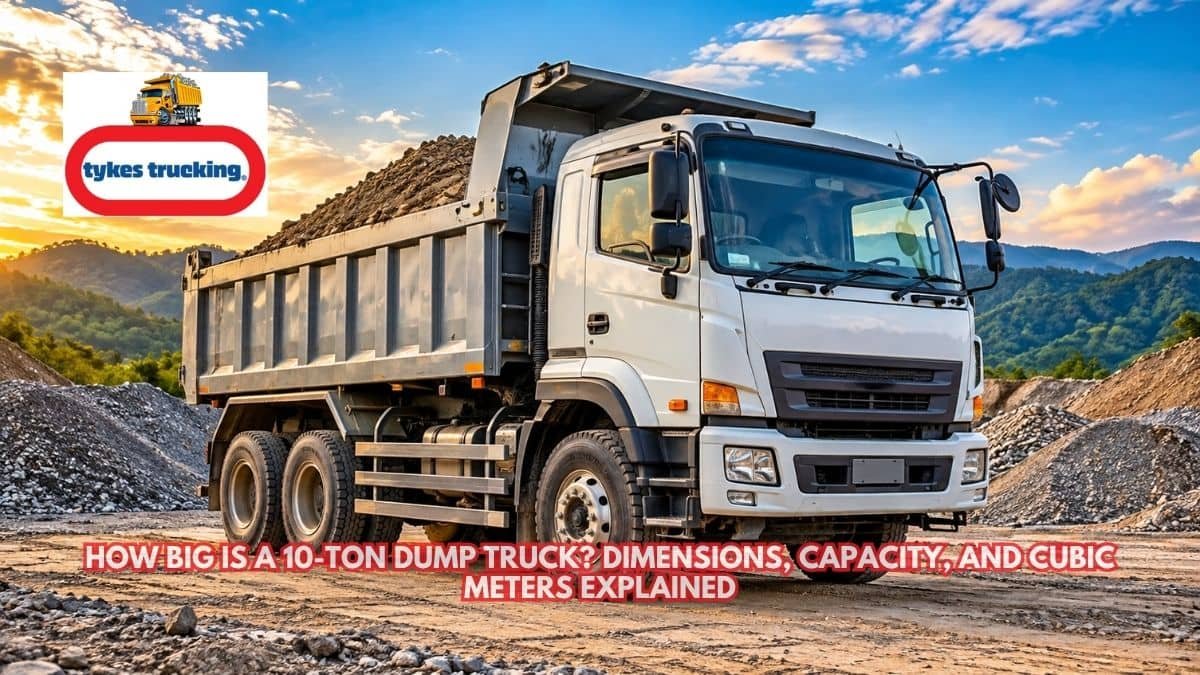
If you’re planning a construction, renovation, or landscaping project in the Philippines, you might be wondering: How big is a 10-ton dump truck, and how much sand, gravel, or other material can it carry?
A 10-ton dump truck is a heavy-duty vehicle commonly used to transport construction aggregates, soil, and other bulk materials. When the term refers to payload capacity, 10 metric tons is equivalent to 10,000 kilograms.
However, not every truck advertised as a 10-ton dump truck can legally or safely carry exactly 10,000 kilograms. Its actual capacity depends on its specifications, weight, axle configuration, and applicable road weight restrictions.
The truck’s physical dimensions also vary depending on its make, model, and cargo bed design.
We’ll explain the dimensions and carrying capacity of a 10-ton dump truck, how to estimate material quantities in cubic meters, and what to consider when arranging aggregate delivery in the Philippines.
Key Takeaways
- Weight capacity: A 10-metric-ton payload equals 10,000 kilograms, but the actual allowable cargo weight must be verified for the specific truck.
- Dimensions: There is no universal length, width, or height for a 10-ton dump truck. Measurements depend on its model and configuration.
- Material volume: At an assumed density of 1,600 kg/m³, 10 metric tons of dry sand occupies approximately 6.25 cubic meters.
- Gravel capacity: At an assumed density of 1,700 kg/m³, 10 metric tons of gravel occupies approximately 5.88 cubic meters.
- Weight versus volume: Tons measure mass, while cubic meters measure volume. Both are important when estimating aggregate deliveries.
- Philippine regulations: Trucks must comply with applicable gross vehicle weight, axle-load, and road-use restrictions.
- Delivery planning: Always consider road accessibility, unloading space, ground conditions, and the number of trips required.
1. What Is a 10-Ton Dump Truck?
A 10-ton dump truck is a commercial vehicle used to transport and unload bulk materials such as sand, gravel, crushed stone, soil, and construction debris.
Unlike an ordinary cargo truck, a dump truck has an open cargo bed equipped with a hydraulic lifting mechanism. This allows the operator to raise the bed and discharge loose materials through the rear.
This makes dump trucks particularly useful for construction projects where large quantities of materials need to be delivered or removed efficiently.
In the Philippines, dump trucks are commonly used for:
- Sand and gravel delivery
- Construction aggregate hauling
- Excavation and earthmoving
- Road construction and maintenance
- Land development and site preparation
- Landscaping and backfilling
- Construction debris removal
What Does “10-Ton” Actually Mean?
When referring to payload capacity, 10 metric tons means 10,000 kilograms of cargo.
However, it’s important to understand that the term “10-ton” may be used differently by truck manufacturers, equipment suppliers, and hauling operators.
Some descriptions refer to payload capacity, while others may refer to a vehicle’s weight classification.
For this article, we’ll use 10-ton dump truck to describe a vehicle with a nominal payload rating of 10 metric tons.
The actual allowable load must still be confirmed using the truck’s specifications and applicable legal weight limits.
🚚 How Dump Truck Hauling Services Help Keep Construction Projects on Schedule
2. What Are the Dimensions of a 10-Ton Dump Truck?
There is no single standard size for every 10-ton dump truck.
Two trucks with similar payload ratings can have different dimensions because of their chassis, wheelbase, axle arrangement, and dump body configuration.
To understand how big a particular truck is, you need to consider its overall length, width, height, and cargo bed dimensions.
Overall Length
The overall length is measured from the frontmost to the rearmost part of the truck.
This measurement is particularly important when checking whether the truck can enter narrow streets, pass through gates, or maneuver around a construction site.
Longer trucks generally need more space for turning and positioning.
Overall Width
The overall width determines how much horizontal clearance the truck needs.
For delivery planning, it’s important to consider protruding components such as side mirrors, which may extend beyond the truck’s body.
This is especially relevant in Philippine residential areas, where narrow roads, parked vehicles, and limited access points can make deliveries challenging.
Overall Height
The overall height is measured from the ground to the truck’s highest fixed point when its cargo bed is lowered.
This measurement helps determine whether the vehicle can safely pass beneath overhead structures and other obstructions.
However, the truck’s height increases significantly when the dump bed is raised.
For this reason, unloading areas must have adequate overhead clearance and be free from electrical lines and other hazards.
Cargo Bed Dimensions
The cargo bed determines how much material the truck can physically contain.
Its important measurements include:
| Specification | Description |
| Overall length | Total length of the truck |
| Overall width | Total vehicle width |
| Overall height | Height with the cargo bed lowered |
| Cargo bed length | Internal length of the loading area |
| Cargo bed width | Internal width of the loading area |
| Cargo bed height | Internal height of the loading area |
| Cargo bed volume | Physical capacity measured in cubic meters |
| Rated payload | Manufacturer-specified cargo weight capacity |
The exact dimensions of a 10-ton dump truck should be obtained from the specific vehicle’s specifications. A 10-ton payload rating alone does not establish its physical size.
If you’re hiring a dump truck, ask the hauling company about its dimensions, especially if your delivery location has limited access.
🚚 Box Dump Truck vs. Traditional Dump Truck: Which Is Right for Your Project?
3. How Much Weight Can a 10-Ton Dump Truck Carry?
If a dump truck has a manufacturer-rated payload of 10 metric tons, that rating represents 10,000 kilograms of cargo under the manufacturer’s specified conditions.
However, the actual permitted cargo weight may be lower depending on the truck’s operating configuration and applicable legal restrictions.
To understand this, it’s helpful to distinguish three important measurements.
Payload Capacity
Payload capacity refers to the weight of cargo a truck is designed to carry.
For example, a nominal 10-metric-ton payload equals 10,000 kilograms.
Unladen Weight
Unladen weight generally refers to the weight of the truck without cargo. The exact definition used in a specification may determine whether fuel, equipment, or other items are included.
A truck’s chassis, engine, dump body, and hydraulic equipment all contribute to its own weight.
Gross Vehicle Weight (GVW)
Gross vehicle weight refers to the total weight of the vehicle at a particular time, including the truck itself, its occupants, fuel, equipment, and cargo.
This is different from the maximum gross vehicle weight permitted for the truck.
For example, suppose a truck weighs 9,000 kilograms before loading, including its driver, fuel, and equipment.
If its applicable maximum permitted gross vehicle weight is 18,000 kilograms, the available cargo allowance based on that limit would be:
18,000 kg − 9,000 kg = 9,000 kg
In this example, the truck could not carry a full 10,000-kilogram load without exceeding the stated gross vehicle weight limit.
The actual allowable payload must also account for manufacturer ratings, axle-load limits, and other applicable restrictions.
A truck’s advertised capacity is not always the same as the amount it can legally transport on public roads.
🚚 Dump Truck for Hire: What Materials Can We Haul for Your Construction Project?
4. How Many Cubic Meters Can a 10-Ton Dump Truck Carry?
This is one of the most useful things to understand when ordering construction aggregates in the Philippines.
Sand, gravel, crushed stone, and other bulk materials are commonly estimated or quoted in cubic meters (m³).
However, a cubic meter measures volume, while a metric ton measures mass.
The relationship between them depends on the material’s bulk density.
Estimated Material Capacity
The table below shows how much volume different materials would occupy at a mass of 10,000 kilograms.
| Material | Assumed Bulk Density | Volume at 10 Metric Tons |
| Dry sand | 1,600 kg/m³ | 6.25 m³ |
| Gravel | 1,700 kg/m³ | 5.88 m³ |
| Crushed stone | 1,500 kg/m³ | 6.67 m³ |
| Loose topsoil | 1,200 kg/m³ | 8.33 m³ |
These values are illustrative estimates based on assumed loose bulk densities.
Actual densities vary depending on the material’s source, grading, moisture content, and compaction.
The truck’s physical cargo bed capacity may also limit the volume that can be transported.
How to Calculate Material Volume
You can estimate the volume of a material using this formula:
Volume (m³) = Mass (kg) ÷ Bulk Density (kg/m³)
Let’s say you’re ordering dry sand with an estimated bulk density of 1,600 kg/m³.
If the truck has an available cargo allowance of 10,000 kilograms:
10,000 ÷ 1,600 = 6.25 m³
This means 10 metric tons of that sand would occupy approximately 6.25 cubic meters.
However, this does not automatically mean the truck can deliver 6.25 cubic meters.
The truck must also have sufficient cargo bed space and be permitted to carry the corresponding load.
Can a 10-Ton Dump Truck Carry 10 Cubic Meters?
Not necessarily.
This is a common source of confusion when estimating aggregate deliveries.
For example, if dry sand has an assumed density of 1,600 kg/m³, then 10 cubic meters would have a mass of:
10 × 1,600 = 16,000 kg
That’s equivalent to 16 metric tons.
A truck with a maximum available payload of 10 metric tons would exceed its capacity if loaded with that amount of sand.
Therefore, 10 tons and 10 cubic meters are not interchangeable measurements.
Always consider the material’s mass, the truck’s allowable payload, and its cargo bed volume before determining how much can be delivered in one trip.
🚚 How to Choose the Right Dump Truck Hauling Service in the Philippines
5. How Much Sand, Gravel, or Crushed Stone Can It Deliver?
The amount of material a dump truck can deliver depends on its available payload and the material’s bulk density.
Let’s look at three common construction aggregates used in the Philippines.
Sand
Sand is commonly used for concrete mixing, masonry work, plastering, and filling.
At an assumed dry bulk density of 1,600 kg/m³, 10 metric tons of sand occupies approximately 6.25 cubic meters.
However, wet sand can have a different bulk density, which affects the volume that can be transported within the same weight limit.
Gravel
Gravel is widely used for concrete production, drainage, landscaping, and construction foundations.
At an assumed bulk density of 1,700 kg/m³, 10 metric tons of gravel occupies approximately 5.88 cubic meters.
The actual volume depends on the gravel’s particle size, grading, and moisture content.
Crushed Stone
Crushed stone is commonly used for road bases, concrete production, and other construction applications.
At an assumed loose bulk density of 1,500 kg/m³, 10 metric tons occupies approximately 6.67 cubic meters.
Because crushed stone comes in different sizes and gradings, its actual bulk density may differ considerably.
How Many Trips Will You Need?
Suppose your project requires 20 cubic meters of dry sand.
Using an estimated delivery quantity of 6.25 cubic meters per trip:
20 ÷ 6.25 = 3.2 trips
You would need approximately 4 trips to deliver the full quantity.
This calculation assumes the truck can safely and legally carry 6.25 cubic meters per trip and that its cargo bed can accommodate that volume.
For actual delivery planning, ask your hauling provider to confirm the quantity available per truckload.
🚚 Comparing Different Types of Dump Beds for Trucks: Which One Is Right for You?
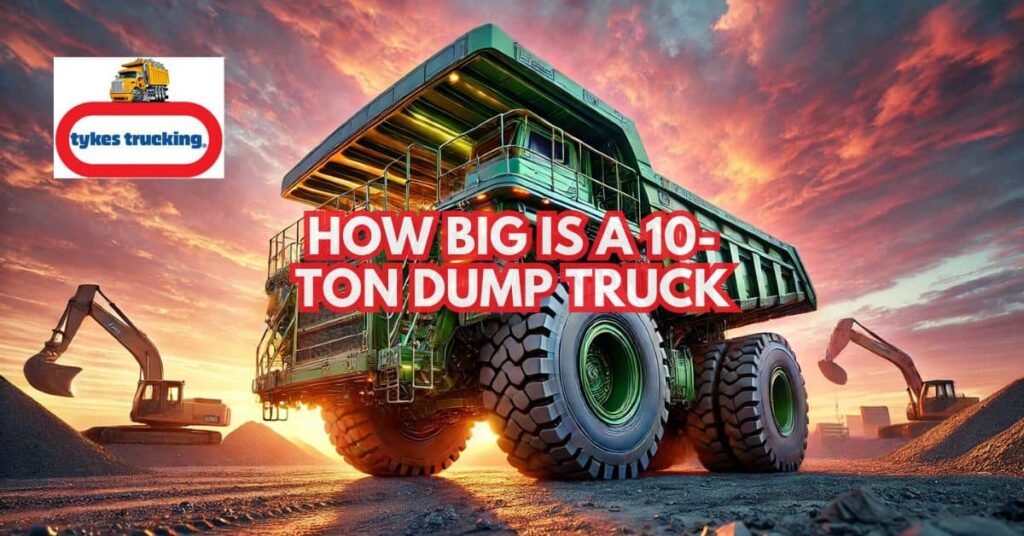
6. Is a 10-Ton Dump Truck the Same as a 10-Wheeler?
No. These terms describe different characteristics.
A 10-ton dump truck refers to a truck’s weight classification or nominal payload capacity.
A 10-wheeler dump truck refers to its wheel arrangement.
In the Philippines, trucks are often described as six-wheelers, ten-wheelers, or by other wheel configurations.
These descriptions are useful, but the number of wheels does not automatically determine a truck’s payload capacity.
For example, two ten-wheeler dump trucks may have different allowable cargo weights because of differences in their chassis, dump bodies, axle specifications, and registered weight limits.
Similarly, a truck with a nominal 10-ton payload is not necessarily a ten-wheeler.
When choosing a hauling service, it’s better to confirm the truck’s actual specifications rather than relying only on its wheel count.
🚚 Dump Truck Bed Liners: Types, Benefits, Costs, and How to Choose
7. What Are the Common Uses of a 10-Ton Dump Truck?
Dump trucks with suitable payload capacities are used for various construction and hauling activities throughout the Philippines.
Construction Material Delivery
Dump trucks transport sand, gravel, crushed stone, and other aggregates used in residential, commercial, and infrastructure projects.
Their hydraulic unloading systems make them particularly useful for delivering loose materials directly to designated unloading areas.
Road Construction and Maintenance
Road construction projects require aggregates for base preparation, backfilling, and other applications.
Dump trucks help transport these materials between suppliers, stockpiles, and construction sites.
Excavation and Site Preparation
During excavation, dump trucks are used to remove soil, rocks, and other suitable excavated materials.
They can also deliver filling materials needed to prepare or level construction areas.
Landscaping
Landscaping projects often require soil, gravel, and decorative stones.
Dump trucks can transport bulk quantities more efficiently than smaller delivery vehicles when site access permits.
Construction Debris Hauling
Dump trucks may also be used to transport suitable construction debris to authorized facilities.
The type of debris, vehicle suitability, and applicable waste handling requirements should be confirmed before hauling.
🚚 Understanding Dump Truck Sizes: How to Select the Best Fit for Your Needs
8. What Should You Consider Before Hiring a 10-Ton Dump Truck in the Philippines?
Before arranging a delivery, make sure the truck is suitable for your project and that the unloading location is accessible.
Here are the main factors to consider.
1. Material Type and Quantity
Identify the material you need and estimate its required volume in cubic meters.
Remember that different materials have different bulk densities.
A truck that can carry a certain volume of soil may not be able to carry the same volume of gravel without exceeding its allowable weight.
2. Road Width and Accessibility
Some residential streets and construction access roads in the Philippines are narrow or difficult for heavy vehicles to navigate.
Check the width of the road, entrance gate, and available turning space.
Parked vehicles, roadside structures, and other obstructions may also affect access.
3. Overhead Clearance
Dump trucks require sufficient vertical clearance when unloading.
Before scheduling delivery, check for electrical lines, trees, roof extensions, and other overhead obstructions.
A truck should never raise its dump bed where it could contact or dangerously approach electrical lines.
4. Ground Conditions
The unloading area should be stable and sufficiently level.
Soft ground, steep slopes, and uneven surfaces can create serious safety risks, particularly when the dump bed is raised.
5. Local Truck Restrictions
Truck routes and operating restrictions can vary between cities and municipalities.
Depending on the delivery location, certain roads may have restrictions related to heavy vehicles, operating hours, or vehicle dimensions.
Check applicable requirements with the hauling provider and relevant local authorities.
6. Delivery Distance and Number of Trips
Delivery costs may be affected by the distance between the aggregate source and your project site.
Larger orders may require multiple trips, depending on the truck’s allowable payload and cargo bed volume.
Knowing the estimated number of trips can help you plan your budget and construction schedule.
7. Material Unloading Arrangements
Confirm where the truck will unload the materials.
Make sure the location is accessible, has adequate clearance, and can safely accommodate the delivery.
You should also clarify whether the service includes only transportation and dumping or any additional material handling.
🚚 The Importance of Reefer Truck Delivery in the Food Supply Chain
9. Philippine Regulations and Safety Considerations
Dump truck operators in the Philippines must comply with applicable vehicle registration, road safety, and weight regulations.
One important law is Republic Act No. 8794, which establishes the Motor Vehicle User’s Charge framework and includes provisions addressing truck overloading.
Its implementing regulations establish permissible gross vehicle weight limits for different truck configurations and address axle-load restrictions.
The Department of Public Works and Highways (DPWH) also administers anti-truck-overloading operations, while the Land Transportation Office (LTO) has responsibilities involving vehicle registration and enforcement.
Gross Vehicle Weight and Axle-Load Limits
The allowable weight of a truck depends on its configuration and the applicable regulations.
A truck’s gross vehicle weight includes the vehicle itself and everything it carries.
Even if the total weight is within the permitted gross vehicle weight, improper load distribution can create excessive weight on an individual axle.
Therefore, operators must consider both gross vehicle weight and applicable axle-load restrictions.
Avoid Overloading
Overloading can cause:
- Reduced braking performance
- Excessive tire and suspension wear
- Poor vehicle handling
- Increased mechanical stress
- Greater risk of accidents
- Damage to roads and bridges
- Possible fines and enforcement action
Operators should verify the permissible load before transporting materials.
Safe Loading and Unloading
Loose materials should be loaded and contained appropriately to reduce spillage and maintain stability.
When unloading, the truck should be positioned on stable, sufficiently level ground.
Raising the dump bed on uneven or unstable surfaces can increase the risk of tipping.
Operators should also ensure that the unloading area is clear of people and overhead hazards.
Check Applicable Local Requirements
In addition to national regulations, operators should confirm applicable local traffic rules and road restrictions.
Requirements can differ depending on the route, vehicle classification, and delivery location.
For this reason, it’s important to work with a hauling provider familiar with the operating conditions in your area.
🚚 Dump Truck Hauling Services in the Philippines
10. How to Choose the Right Dump Truck for Your Project
Choosing the right dump truck involves more than comparing advertised capacities.
You need to consider the material being transported, the quantity required, and the conditions at the delivery site.
A truck with a nominal 10-metric-ton payload may be suitable for many construction and aggregate delivery projects.
However, a smaller vehicle may be more practical for locations with narrow access roads or limited unloading space.
Larger trucks may be more efficient for high-volume deliveries, provided they can safely and legally access the site.
Before hiring a dump truck, confirm the following:
- The type and quantity of material required
- The truck’s allowable payload capacity
- Its cargo bed volume and dimensions
- The accessibility of the delivery location
- The estimated number of trips
- The hauling cost and delivery arrangements
The best dump truck for your project is the one that can deliver the required materials safely, legally, and efficiently.
Frequently Asked Questions (FAQs)
1. How big is a 10-ton dump truck?
The dimensions of a 10-ton dump truck depend on its make, model, chassis, wheelbase, and cargo bed configuration. There is no universal length, width, or height based solely on a 10-ton payload rating. Ask the hauling provider for the actual truck measurements if site clearance is a concern.
2. How many cubic meters can a 10-ton dump truck carry?
The volume depends on the material’s bulk density and the truck’s cargo bed capacity. For example, 10 metric tons of dry sand at an assumed density of 1,600 kg/m³ occupies approximately 6.25 cubic meters. The actual permissible delivery quantity may be lower.
3. How many cubic meters of gravel can a 10-ton dump truck deliver?
At an assumed bulk density of 1,700 kg/m³, 10 metric tons of gravel occupies approximately 5.88 cubic meters. Actual delivery quantities depend on the gravel’s density and the truck’s allowable payload and cargo bed capacity.
4. Can a 10-ton dump truck carry 10 cubic meters of sand?
Not if the sand’s weight exceeds the truck’s available payload. At an assumed density of 1,600 kg/m³, 10 cubic meters of sand weighs approximately 16,000 kilograms, exceeding a 10,000-kilogram payload limit.
5. Is a 10-ton dump truck the same as a 10-wheeler?
No. A 10-ton rating describes a weight classification or nominal payload, while a 10-wheeler describes the truck’s wheel arrangement. A ten-wheeler does not automatically have a 10-ton payload capacity.
6. Can a 10-ton dump truck enter residential streets in the Philippines?
It depends on the truck’s actual dimensions, road width, turning space, ground conditions, and applicable local restrictions. Some residential streets may be unsuitable for heavy vehicles. Confirm access before scheduling a delivery.
7. How many trips are needed to deliver 20 cubic meters of sand?
If the truck can safely carry 6.25 cubic meters per trip, approximately four trips would be required. The actual number depends on the sand’s density, cargo bed capacity, and allowable truck payload.
8. How much does it cost to hire a 10-ton dump truck in the Philippines?
Hauling costs vary depending on the delivery distance, material type, number of trips, road accessibility, and service arrangements. Contact a hauling provider for a quotation based on your project requirements.
9. What materials can a 10-ton dump truck transport?
Depending on its configuration and the hauling arrangement, a dump truck may transport sand, gravel, crushed stone, soil, filling materials, excavated earth, and suitable construction debris. The material must be compatible with the truck and comply with applicable loading and transport requirements.
10. How do I know whether a 10-ton dump truck is suitable for my project?
Start by determining the type and quantity of material you need. Then confirm the truck’s allowable payload, cargo bed capacity, dimensions, and access requirements. A hauling provider can help you determine whether the available truck is appropriate for your delivery.
Conclusion
Understanding how big a 10-ton dump truck is requires looking at both its physical dimensions and its carrying capacity.
While a nominal 10-metric-ton payload equals 10,000 kilograms, the truck’s actual allowable cargo weight depends on its specifications and applicable operating restrictions.
The amount of material it can transport also varies according to bulk density.
For example, 10 metric tons of dry sand may occupy approximately 6.25 cubic meters, while the same weight of gravel may occupy around 5.88 cubic meters under the assumptions used in this guide.
These estimates can help you plan aggregate deliveries, calculate truckloads, and determine the approximate number of trips required.
However, you should always confirm the actual truck specifications and delivery quantities with your hauling provider.
By considering the truck’s capacity, site accessibility, and hauling requirements, you can choose a suitable vehicle and keep your construction project running efficiently.
Need a 10-Ton Dump Truck for Sand and Gravel Delivery?
Planning a construction, renovation, or landscaping project in the Philippines?
Tykes Trucking Services provides aggregate delivery and hauling services for customers who need sand, gravel, crushed stone, and other construction materials.
Whether you’re preparing a construction site, working on a foundation, or arranging bulk material deliveries, we’re here to help with your hauling requirements.
To request a quotation, simply provide the type of material you need, your estimated quantity in cubic meters, and your delivery location.
Contact Tykes Trucking Services:
- Call or text: 0917-543-5019
- Facebook: Tykes Trucking Services
- Website: Contact Us
Let us help you arrange the materials and hauling services your project needs.
Content Disclaimer
The information in this article is provided for general educational and informational purposes only and is intended primarily for readers in the Philippines.
References to a “10-ton dump truck” are based on a nominal payload of 10 metric tons unless otherwise stated. Actual vehicle classifications, dimensions, payload capacities, and permitted operating weights may differ.
All material densities, volume calculations, and estimated delivery quantities are illustrative. Actual values depend on material characteristics, moisture content, cargo bed capacity, vehicle specifications, and applicable legal weight limits.
Information about Philippine transport regulations is general in nature and should not be considered legal, engineering, or professional safety advice. Laws, implementing rules, enforcement policies, and local road restrictions may change.
Before arranging a delivery, verify the truck’s specifications, allowable loading capacity, delivery conditions, and applicable regulations with the hauling provider and relevant authorities.
For project-specific information, delivery arrangements, and quotations, please contact Tykes Trucking Services directly.