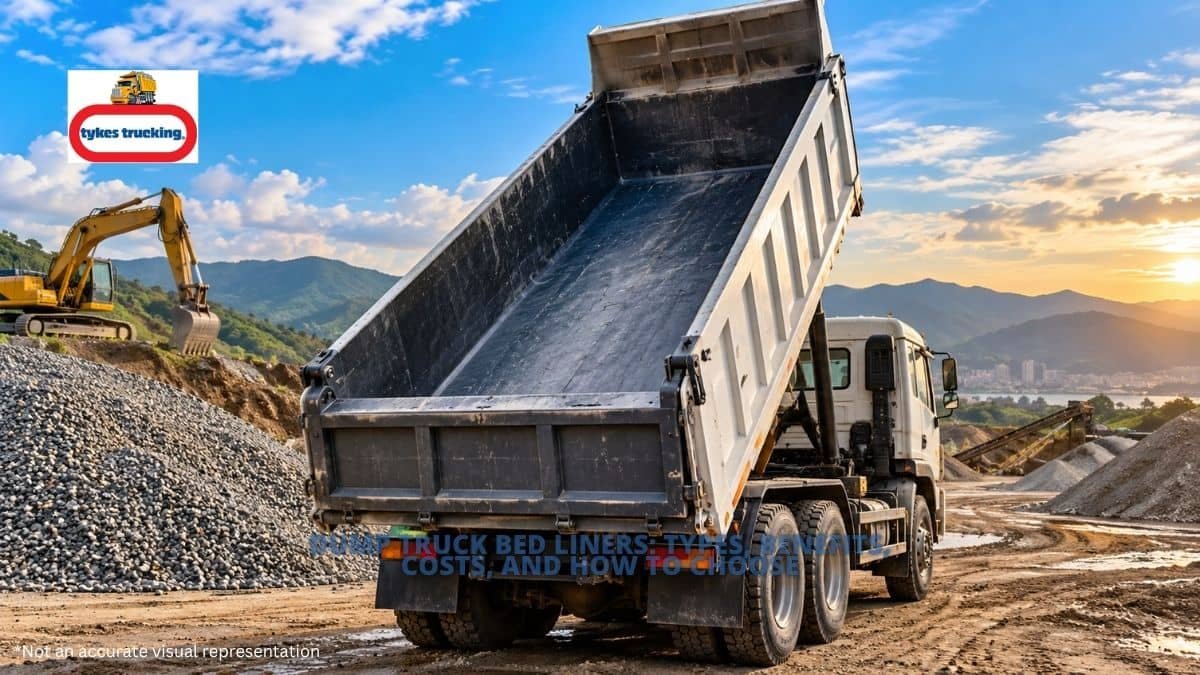
Dump trucks work in demanding conditions. Day after day, their dump bodies may be loaded with sand, gravel, crushed stone, soil, construction debris, and other materials that can cause abrasion, impact damage, corrosion, and general wear.
A properly selected dump truck bed liner creates a protective wear surface between the material being hauled and the dump body itself. Depending on the type of liner and the application, it can help reduce wear, improve material release, make cleaning easier, and extend the service life of the dump body.
But not every liner is right for every truck. The material you haul, how abrasive or sticky it is, how frequently the truck operates, the liner’s weight, operating temperature, dump-body design, and budget all affect which option makes the most sense.
This guide explains the main types of dump truck bed liners, their advantages and limitations, what to consider when choosing one, and how they fit into trucking operations in the Philippines.
Key Takeaways
- A dump truck bed liner protects the dump body from abrasion, impact, and other forms of wear.
- There is no single best liner material. Polymer, rubber or other elastomeric materials, and abrasion-resistant steel each have different strengths.
- Low-friction liners can improve unloading when hauling materials that tend to stick to the dump body.
- Liner weight matters. Any liner adds to the truck’s empty weight and therefore needs to be considered when calculating legal and safe payload.
- The cargo matters more than simply calling a load “light” or “heavy.” Abrasion, impact, moisture, particle size, temperature, and material stickiness all affect liner selection.
- Philippine operating conditions should be considered. Heat, heavy rain, humidity, and frequent exposure to wet materials can influence liner performance and maintenance.
- Proper installation and inspection are essential. A poorly installed or badly worn liner can create problems instead of solving them.
- Cost should be evaluated over the liner’s service life, not just by its initial purchase price.
1. What Is a Dump Truck Bed Liner?
A dump truck bed liner is a protective surface installed inside the truck’s dump body, sometimes simply called the truck bed.
It acts as a replaceable wear layer between the cargo and the structural surface of the dump body. Instead of gravel, rocks, soil, or debris constantly scraping and striking the body itself, much of that wear is absorbed by the liner.
Some liners also provide a lower-friction surface. This can help certain materials slide out more easily when the body is raised, reducing the amount of material left behind after unloading.
Bed liners are available in different materials, grades, thicknesses, and installation systems. Choosing the right one therefore requires more than simply looking for the thickest or strongest liner available.
🚚 Understanding Dump Truck Sizes: How to Select the Best Fit for Your Needs
2. What Are the Benefits of a Dump Truck Bed Liner?
The main purpose of a liner is protection, but a suitable liner can provide several operational benefits.
Reduced Dump-Body Wear
Sand, aggregates, rocks, and construction materials can gradually wear away a dump-body floor through abrasion and repeated impact.
A liner takes much of this wear, potentially delaying major repairs to the body itself.
That can be particularly valuable for trucks that regularly haul aggregates or other abrasive materials.
Better Material Release
Wet soil, clay, fine aggregates, and other cohesive materials can cling to a dump body instead of sliding out cleanly.
Low-friction liner materials can help reduce this carry-back. A cleaner release may shorten unloading time and reduce the need to manually remove retained material.
The improvement will depend on the cargo, moisture content, liner material, temperature, and dump-body design.
Easier Cleaning
When less material adheres to the body, cleaning can become easier.
This can be useful for trucks switching between different materials or operating in wet conditions where soil, clay, and similar cargo may accumulate in the body.
Potentially Lower Repair Costs
A liner is a wear component and will eventually require maintenance or replacement. However, replacing a worn liner can be preferable to repeatedly repairing major sections of the dump-body floor.
The actual savings will depend on operating conditions, liner cost, service life, and the type of material being hauled.
Impact and Noise Reduction
Rubber and certain polymer or elastomeric liners can absorb some impact and vibration when material is loaded into the body.
This may also reduce noise compared with direct material-to-metal contact.
🚚 The Importance of Reefer Truck Delivery in the Food Supply Chain
3. What Types of Dump Truck Bed Liners Are Available?
There is no universal liner that works best for every hauling operation.
| Liner Type | Main Advantages | Considerations | Typical Applications |
| HDPE, UHMW-PE, and other engineered polymers | Relatively lightweight, low friction, corrosion-resistant material, good material release | Correct grade, thickness, temperature rating, and installation are important | Sand, soil, clay, limestone, aggregates, agricultural products, and other bulk materials |
| Rubber and elastomeric liners | Good impact absorption, flexibility, and noise reduction | Greater surface friction may make them less suitable when easy material release is the main priority | High-impact applications and operations where cushioning is important |
| Polyurethane/polyurea systems | Can provide abrasion and impact resistance; some systems create a continuous protective surface | Performance varies considerably by formulation and application method | Specialized wear-protection applications |
| Abrasion-resistant steel | Strong resistance to severe abrasion and impact | Heavier than polymer alternatives and may require fabrication and welding | Rock, minerals, demolition debris, and other severe-duty applications |
Availability will vary among suppliers in the Philippines, so operators should compare actual specifications rather than relying solely on the general material category.
HDPE and UHMW-PE Liners
High-density polyethylene (HDPE), ultra-high-molecular-weight polyethylene (UHMW-PE), and related engineered polymers are commonly used where low friction, wear resistance, and relatively low weight are important.
One misconception is that plastic liners are only intended for light-duty use. Heavy-duty grades of UHMW-PE are available for demanding applications involving materials such as gravel, limestone, clay, sand, topsoil, and similar bulk materials.
However, not all polyethylene sheets have the same properties. An ordinary sheet of plastic should not be treated as equivalent to a purpose-designed dump-body liner.
The material grade, thickness, temperature range, fastening system, and intended application all matter.
Rubber and Elastomeric Liners
Rubber-based liners are useful when absorbing impact is a priority. Their flexibility can help cushion the dump body when large or heavy material is dropped into it.
However, higher friction can sometimes work against easy unloading.
If material sticking is the truck’s main problem, the operator should compare the friction and material-release characteristics of available liner options before choosing rubber.
Polyurethane and Polyurea Systems
Certain polyurethane and polyurea products are used as wear-resistant coatings or protective systems.
They can provide abrasion and impact resistance, but their properties vary widely according to formulation, thickness, surface preparation, and application method.
These products should therefore be evaluated using the specific manufacturer’s technical specifications rather than assuming that all polyurethane or polyurea systems perform the same way.
Abrasion-Resistant Steel
Steel wear plates remain useful for severe applications involving high abrasion and substantial impact.
Their main disadvantage is weight.
Adding a substantial amount of steel to the dump body increases the truck’s empty weight. That needs to be considered when calculating how much cargo the truck can legally and safely carry.
Steel can also be subject to corrosion, particularly where protective coatings are damaged and the truck regularly operates in wet or humid environments.
🚚 A Comprehensive Guide to Excavation Hauling Services in Marikina: What You Need to Know
4. How Do Bed Liners Affect Unloading, Wear, and Payload?
A liner should be evaluated as part of the truck’s overall operation rather than simply as an added layer of protection.
Unloading
Low-friction liners can help cohesive or sticky materials move more consistently as the dump body is raised.
This can reduce carry-back, but operators should never rely on a liner as a substitute for proper loading and dumping practices.
A partially stuck or unevenly releasing load can affect the truck’s stability while the dump body is raised.
Always dump on suitable, stable ground and operate the truck according to the vehicle and dump-body manufacturers’ procedures.
Wear
Different cargo produces different types of wear.
Fine, abrasive material may gradually grind away the dump-body surface, while large rocks can produce concentrated impact forces.
A liner that performs well against abrasion may not necessarily be the best choice for repeated severe impact.
That’s why you should evaluate the actual material being hauled rather than selecting a liner based only on general descriptions such as “heavy-duty.”
Payload
Every liner has weight, and that weight becomes part of the truck’s empty weight.
The heavier the liner, the less weight may remain available for cargo within the truck’s rated capacity and applicable legal weight limits.
This matters in the Philippines, where trucks are subject to prescribed gross vehicle weight and axle-load limits.
The weight of the truck, liner, fuel, driver, accessories, and cargo should all be considered when determining the safe and lawful operating weight.
🚚 The Role of Refrigerated Trucking Services in Marikina in the Supply Chain
5. Philippine Weight Limits and Overloading Considerations
Dump truck operators in the Philippines should consider the weight of a bed liner as part of their overall compliance with vehicle weight regulations.
Republic Act No. 8794, or the Motor Vehicle User’s Charge law, provides penalties for trucks and trailers loaded beyond their prescribed gross vehicle weight and includes limits related to axle loading.
Actual allowable gross vehicle weight depends on the truck’s configuration and applicable classifications.
Installing a liner does not increase how much cargo a truck may legally carry. A heavy liner may actually reduce the amount of cargo that can be carried while remaining within the applicable weight limit.
Operators should:
- Know the truck’s rated capacities.
- Consider the weight of any liner or modification.
- Monitor actual loaded weight.
- Observe applicable gross vehicle weight and axle-load limits.
- Follow current requirements and enforcement guidance from the LTO and DPWH.
Avoid calculating payload based only on the apparent remaining space inside the dump body. A truck can exceed its legal weight limit before the body is physically full.
🚚 Secure Your Load, Secure Your Crew: A Guide to Flatbed Truck Fall Protection
6. How to Choose the Right Dump Truck Bed Liner
Instead of asking, “Which liner is the strongest?” a better question is:
Which liner best matches what my truck actually hauls?
Start with the following factors.
What Material Do You Haul?
Consider:
- Abrasiveness
- Particle size
- Impact level
- Moisture content
- Tendency to stick
- Chemical characteristics
- Loading height
- Operating temperature
For example, wet clay creates a different problem from crushed rock. Clay may require better material release, while large rocks may make impact resistance more important.
How Frequently Is the Truck Used?
A truck hauling aggregates throughout the week may require a different liner from a truck making only occasional deliveries.
As utilization increases, liner durability and downtime become increasingly important.
Does the Material Tend to Stick?
If unloading is a persistent problem, pay particular attention to liner friction.
Low-friction polymer liners can be useful for cohesive materials, but the best choice depends on the specific cargo and operating conditions.
How Abrasive Is the Material?
Sand, gravel, crushed stone, and quarry products can produce significant abrasion.
Look for a liner specifically rated for the level of wear expected instead of relying only on thickness.
What Temperatures Will the Liner Experience?
Temperature is particularly important with polymer liners.
A dump body parked under direct Philippine sunlight can become very hot, and materials such as hot asphalt can expose a liner to much higher temperatures.
Not every polymer grade is suitable for high-temperature material. Always verify the manufacturer’s operating-temperature limits.
How Much Liner Weight Can the Truck Accommodate?
Compare the liner’s weight against the truck’s available payload and legal operating limits.
A heavier liner may offer advantages in severe-duty applications, but it can also reduce payload.
Is the Liner Compatible With the Dump Body?
Dump bodies differ in material, dimensions, geometry, and construction.
A liner must be compatible with the specific body and installation system. Fastener placement, expansion allowances, clearances, and liner thickness should all follow appropriate technical specifications.
🚚 What Happens at the Back of the Garbage Truck? Understanding the Mechanisms
7. Philippine Climate and Operating Conditions
Local conditions deserve special attention when choosing and maintaining a dump truck liner.
Heat
Ambient temperatures in the Philippines, combined with direct sunlight on a metal dump body, can create high surface temperatures.
Polymer liners expand and contract with changes in temperature, so their installation system must allow for the manufacturer’s specified thermal movement.
Heavy Rain and Moisture
Trucks frequently operate during or shortly after heavy rain. Wet aggregates, soil, and other materials can increase sticking and carry-back.
Moisture can also contribute to corrosion of exposed steel surfaces.
A nonmetallic liner does not itself rust, but installing one does not guarantee that the underlying dump body will never corrode. Edges, fasteners, seams, and damaged areas should still be inspected for trapped moisture and corrosion.
Mud and Debris
Wet construction sites can introduce mud and debris around liner edges and fastening points.
Regular cleaning and inspection make it easier to identify loose fasteners, deformation, or damage before the problem becomes severe.
🚚 How to Choose the Right Reefer Truck Rental for Your Needs
8. Installation: DIY or Professional?
Some liner systems are available in kits that may be installed by an experienced fleet maintenance team. Others require specialized fabrication, fastening, welding, coating equipment, or professional installation.
DIY installation may reduce labor costs, but only when the installer has the necessary knowledge, tools, and manufacturer instructions.
Incorrect installation can result in:
- Buckling
- Loose panels
- Premature wear
- Damaged fasteners
- Incorrect allowance for thermal expansion
- Interference with dump-body operation
Professional installation may provide better fitment and may also be required to maintain certain product warranties.
Before installation, confirm the requirements of both the liner supplier and the dump-body or truck manufacturer.
🚚 How Does Dump Truck Exhaust Affect Air Quality On Construction Sites?
9. Safety Considerations for Philippine Trucking Operations
A bed liner can improve wear protection and unloading, but it does not eliminate the hazards associated with operating a dump truck.
Employers and workers in the Philippines are subject to applicable occupational safety and health requirements, including Republic Act No. 11058 and relevant DOLE rules and standards.
Basic precautions include:
- Operate equipment only as intended and within rated capacities.
- Provide appropriate training and safety instructions to workers.
- Use suitable personal protective equipment when required.
- Keep workers and bystanders away from loading and dumping areas.
- Be aware of overhead power lines and other obstructions before raising the dump body.
- Dump only where the ground is sufficiently stable and level for the operation.
- Do not overload the truck.
- Follow proper lockout, blocking, or manufacturer-approved securing procedures before maintenance work involving a raised dump body.
- Inspect the truck, hydraulic system, dump body, liner, and related equipment regularly.
Where trucks operate on construction sites, quarries, plants, or other workplaces, the operator should also follow the site’s safety program and instructions.
🚚 Heavy Hauling Services in Marikina: What You Need to Know Before Hiring
10. How to Maintain a Dump Truck Bed Liner
Even a heavy-duty liner is a wear component.
Regular inspection can help prevent a small problem from developing into damage to the underlying dump body.
Look for Signs of Wear
Inspect for:
- Cracks or splits
- Excessive thinning
- Cuts or gouges
- Loose or damaged fasteners
- Buckling
- Deformation
- Separation
- Uneven wear
- Exposed dump-body surfaces
Pay particular attention to areas that receive the greatest impact during loading.
Keep the Dump Body Clean
Remove retained cargo, mud, and debris as appropriate for the material and liner.
A reasonably clean body also makes inspections easier.
Don’t Use Random Lubricants or Release Agents
If material frequently sticks, don’t automatically apply oil, diesel fuel, grease, or another substance to the liner.
A product that improves release could be incompatible with the liner, contaminate the cargo, create environmental problems, or present a safety hazard.
Use only products recommended or approved for the particular liner, cargo, and application.
Repair Damage Early
Loose fasteners, damaged sections, and exposed areas should be investigated promptly.
Continuing to operate with a damaged liner may allow cargo to work underneath it or directly attack the dump-body surface.
🚚 Hauling Services Using Dump Trucks
11. How Much Does a Dump Truck Bed Liner Cost?
There is no single reliable price for a dump truck bed liner in the Philippines.
Cost depends on factors such as:
- Truck and dump-body dimensions
- Liner material
- Material grade
- Thickness
- Quantity required
- Imported versus locally available materials
- Freight and delivery
- Fabrication
- Fastening system
- Surface preparation
- Installation labor
- Warranty
Because supplier prices and foreign-exchange rates can change, it is better to obtain current quotations than rely on generic prices found online.
More importantly, don’t compare liners only by purchase price.
Consider the total cost of ownership, including:
- Expected service life
- Installation cost
- Maintenance
- Replacement frequency
- Truck downtime
- Payload impact
- Unloading efficiency
- Potential dump-body repairs
The cheapest liner upfront is not always the least expensive option over several years of operation.
12. Where Are Dump Truck Bed Liners Used?
Bed liners can be valuable across several industries in the Philippines.
Construction
Dump trucks transporting sand, gravel, filling materials, soil, crushed stone, and construction debris experience repeated abrasion and impact.
A suitable liner can provide a replaceable wear surface that protects the dump body.
Quarrying and Mining
Rock, limestone, ore, and other quarry or mining products can create severe abrasion and impact.
These applications may require heavy-duty polymer, rubber, or abrasion-resistant steel liner systems specifically designed for severe service.
Agriculture
Agricultural hauling can include soil, feed, grain, fertilizer, and other bulk products.
Depending on the cargo, corrosion resistance, cleanliness, contamination risk, and easy material release may all be important.
Solid Waste and Debris
Liners can also protect trucks hauling non-hazardous solid waste and debris.
Hazardous waste is different. In the Philippines, hazardous-waste generation, transport, treatment, and disposal are regulated by the Department of Environment and Natural Resources through the Environmental Management Bureau.
A suitable bed liner does not by itself make a truck authorized or appropriate for transporting hazardous waste. Operators involved in regulated waste transport must comply with applicable DENR-EMB requirements, permits, registrations, vehicle specifications, and handling procedures.
Aggregate Hauling
Aggregate trucks frequently transport sand, gravel, crushed stone, and similar materials.
Because these materials can generate continuous abrasive wear, operators may benefit from choosing a liner specifically matched to the aggregate and loading conditions.
13. When Is a Dump Truck Bed Liner Worth the Investment?
A liner may be worth considering when you regularly experience:
- Noticeable dump-body wear
- Scratches, gouging, or abrasion
- Repeated impact damage
- Corrosion
- Material sticking during unloading
- Excessive time spent cleaning the body
- Frequent dump-body repairs
- High utilization with abrasive loads
The decision should ultimately be based on operating cost.
Compare the purchase, installation, maintenance, and eventual replacement cost of the liner against the potential cost of dump-body repairs, downtime, slower unloading, reduced payload, and premature body replacement.
For trucks that operate frequently and haul abrasive or difficult materials, the economics can be very different from those of a truck used only occasionally.
Frequently Asked Questions About Dump Truck Bed Liners
1. What is the best material for a dump truck bed liner?
There is no single best material.
The right liner depends on the material being hauled, abrasion and impact levels, temperature, unloading requirements, dump-body design, available payload, and budget.
Heavy-duty polymers can offer low friction and lower weight, rubber can provide impact absorption, and abrasion-resistant steel may be appropriate for severe wear and impact.
2. Are plastic dump truck liners only for light-duty use?
No.
Purpose-designed HDPE and UHMW-PE liners are available for demanding trucking applications. Some heavy-duty UHMW-PE products are designed specifically for materials such as gravel, limestone, clay, sand, and similar bulk products.
However, ordinary plastic sheet should not automatically be assumed suitable for dump-truck use.
3. Can a bed liner help wet soil or clay slide out?
A low-friction liner may improve the release of sticky or cohesive materials.
Results still depend on factors such as moisture content, liner material, temperature, dump-body angle, surface condition, and cargo characteristics.
4. Does a bed liner prevent rust?
Not completely.
A polymer or rubber liner does not rust and can reduce direct contact between cargo and portions of the dump body. However, moisture can still reach exposed metal, edges, seams, fastening points, or damaged areas.
Routine corrosion inspection is still necessary.
5. Can a dump truck bed liner increase payload?
No.
Installing a liner does not increase the truck’s rated or legally permitted carrying capacity.
The liner itself adds weight. A lighter liner may preserve more of the truck’s available payload than a heavier one, but the truck must still remain within the manufacturer’s ratings and applicable Philippine gross vehicle weight and axle-load limits.
6. How long does a dump truck bed liner last?
There is no universal lifespan.
Service life depends on the liner material, thickness, cargo, abrasion, impact, loading method, frequency of operation, temperature, installation quality, and maintenance.
Inspecting wear regularly is more useful than relying on a fixed replacement interval.
7. Can I install a dump truck bed liner myself?
Some liner systems can be installed by experienced owners or fleet maintenance personnel using the manufacturer’s instructions.
Others require specialized fabrication, welding, fastening, surface preparation, or application equipment.
If the installation requirements are beyond your team’s capabilities, professional installation is the safer choice.
8. Can I use oil or diesel to stop material from sticking?
Do not assume that oil, diesel, or another petroleum product is an appropriate release agent.
It may damage certain materials, contaminate cargo or the work area, create safety concerns, or cause environmental problems.
Use only a compatible release product that is appropriate for the liner, cargo, and application and permitted under applicable requirements.
9. Are dump truck bed liners required by law in the Philippines?
There is no general requirement that every dump truck in the Philippines must have a bed liner simply because it is a dump truck.
Whether a particular lining or containment system is required can depend on the cargo, vehicle, industry, worksite, and applicable environmental or safety rules.
Operators should comply with applicable LTO, DPWH, DOLE, DENR-EMB, local government, and other regulatory requirements relevant to their operations.
Final Thoughts
A dump truck bed liner may seem like a simple piece of equipment, but choosing the right one requires a good understanding of how the truck is actually used.
Start with the cargo. Consider its abrasiveness, impact, moisture, temperature, and tendency to stick. Then look at the truck’s dump-body design, operating conditions, liner weight, legal payload, maintenance requirements, and overall cost.
For trucks operating in the Philippines, it is also worth considering local heat, humidity, heavy rain, and wet working conditions. Proper installation, inspection, corrosion monitoring, and compliance with Philippine vehicle-weight and workplace-safety requirements should all be part of the decision.
The goal isn’t simply to install the strongest or thickest liner available. It’s to choose a liner that protects the truck while supporting safe, efficient, and economical hauling.
Need Reliable Aggregate Delivery and Hauling Services?
Protecting hauling equipment is only one part of keeping a project moving efficiently. Getting the right materials to the site when you need them matters just as much.
Tykes Trucking Services provides hauling and aggregate delivery for construction and other project needs. Whether you need sand, gravel, or other aggregates delivered to your site, our team can help coordinate the materials and hauling support your project requires.
For rates, availability, or hauling inquiries, call 0917-543-5019, message us through our Facebook page, or contact us through our website.
Content Disclaimer
This article is provided for general informational purposes only and is written primarily with trucking operations in the Philippines in mind.
Vehicle specifications, dump-body designs, liner materials, installation requirements, weight limits, operating conditions, workplace requirements, and environmental regulations may vary according to the vehicle, cargo, location, industry, and applicable laws or government issuances.
Nothing in this article should be treated as engineering, mechanical, legal, environmental, or occupational-safety advice or as a substitute for the instructions and specifications provided by the truck, dump-body, or liner manufacturer.
Before selecting, modifying, installing, maintaining, loading, or operating a dump truck or bed-liner system, consult the appropriate manufacturer or qualified professional when necessary. Truck owners and operators should also verify and comply with current requirements issued by relevant Philippine authorities, including the Land Transportation Office (LTO), Department of Public Works and Highways (DPWH), Department of Labor and Employment (DOLE), Department of Environment and Natural Resources–Environmental Management Bureau (DENR-EMB), local government units, and other agencies having jurisdiction over the particular operation.