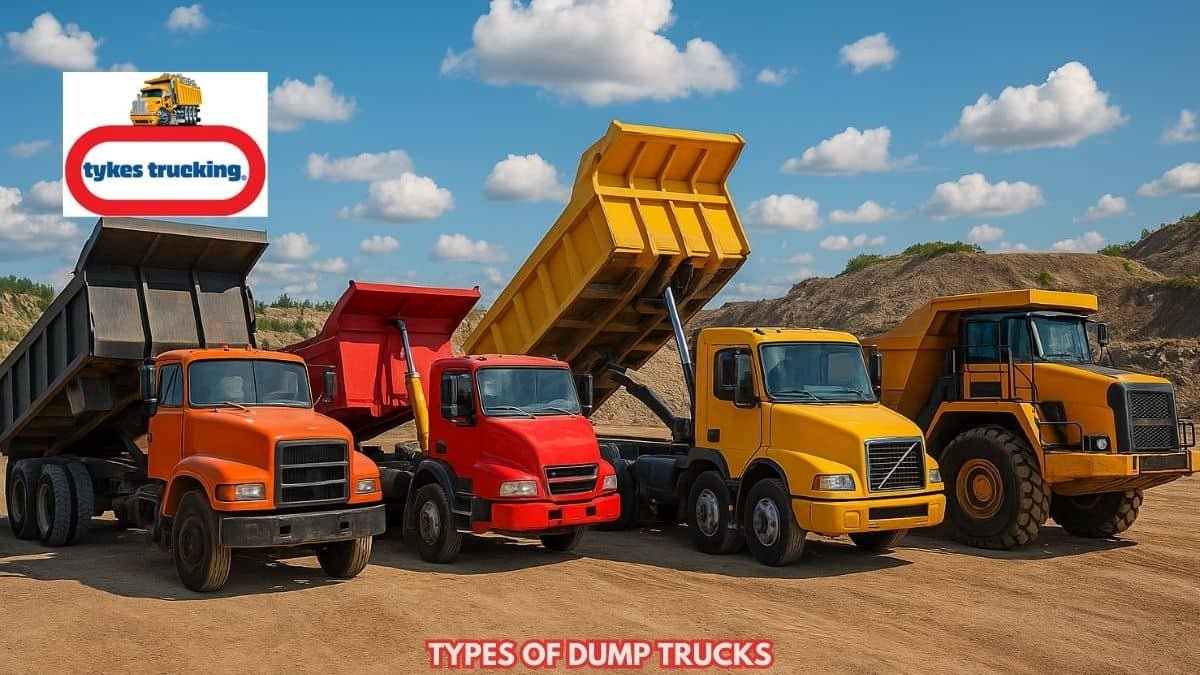
Dump trucks are essential machines in construction, mining, agriculture, and waste management because they make moving heavy materials easier and faster.
There are many types of dump trucks, and each is designed to handle specific tasks and working conditions.
Some are made for short trips in tight spaces, while others are built for long hauls or rough terrain.
Knowing the strengths of each type helps workers choose the right truck for the job and avoid costly mistakes.
A clear understanding of these trucks also improves safety, saves time, and increases efficiency on project sites.
1. Standard Dump Trucks: Features and Common Uses
Standard dump trucks are the most common type of dump truck, built with a strong chassis and a mounted bed that tilts upward at the front to release material.
These dump bodies are designed to carry loose materials such as sand, gravel, dirt, or small stones, making them practical for everyday hauling needs.
Their shorter wheelbase allows them to move easily through narrow streets or crowded job sites where larger trucks would struggle.
Most standard dump trucks have a single rear axle that supports the weight of the load and helps lift the bed during unloading.
Because of their simple design, these trucks are used in many industries, including construction, landscaping, and municipal road work.
They are easy to operate, require less training compared to more advanced truck types, and are often favored for smaller to medium-sized projects.
Overall, standard dump trucks remain popular because they combine versatility, efficiency, and ease of use in a wide range of working conditions.
🚚 How to Optimize Dump Truck Fuel Consumption Per Hour for Cost Savings
2. Side Dump Trucks: Benefits and Applications
Side dump trucks are designed with a hydraulic system that tilts the bed to the side for unloading, providing more stability than traditional rear dump trucks.
This reduces the risk of tipping, especially when working with heavy or uneven loads.
Side dump trucks are well-suited for projects that require fast unloading and where safety is a priority, such as road construction, mining operations, or agricultural work.
Their ability to handle large loads makes them efficient in transporting materials like gravel or sand.
Additionally, their design allows for faster turnaround times as they can unload materials while still in motion.
🚚 How to Choose the Right Dump Truck Hauling Services in the Philippines for Your Needs
3. Rear Dump Trucks: How They Operate and Where They’re Used
Rear dump trucks are the go-to option for many projects requiring material to be deposited directly onto the ground or into specific locations, like trenches.
Their rear-hinged bed, powered by hydraulic lifts, raises to allow material to flow out from the back.
These trucks are ideal for general construction, roadwork, and farming, where precise unloading is necessary.
Rear dump trucks can handle a wide range of materials, from loose soil to debris and rock, making them highly versatile.
They are also easier to operate and control in confined spaces compared to other types of dump trucks.
🚚 How to Choose the Best Dump Truck Design for Your Hauling Needs
4. Trailer-Based Dump Truck Configurations
Trailer-based dump trucks are designed to move large amounts of material by using a tractor that pulls one or more dump trailers.
A semi-end dump truck can haul very heavy loads, but operators must be careful when raising the trailer to avoid tipping, especially on uneven ground.
Belly or bottom dump trailers unload through doors on the bottom, spreading material in a straight line that is useful for road building and surface leveling.
A transfer dump truck, sometimes called a truck and a pup, has a main truck that pulls a smaller dump trailer, allowing extra material to be moved without overloading a single unit.
These setups are often chosen when contractors want to maximize payload capacity while staying within legal weight limits.
Trailer-based systems are common for long hauls on paved roads because they allow quick unloading and faster turnaround compared to some rigid-body trucks.
By offering different designs such as end dump truck trailers, belly dumps, and transfer units, these configurations give operators flexibility to match the truck to the specific needs of the job.
🚚 How to Choose the Best Trucking Services in Cainta for Your Needs
5. Articulated Dump Trucks: Handling Tough Terrain
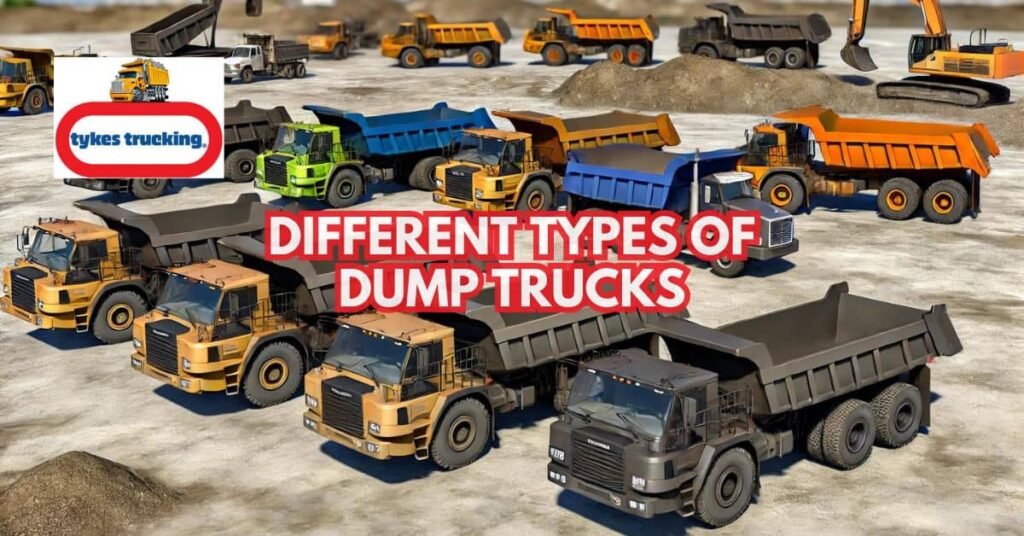
Articulated dump trucks have a cab and a separate dump box that are joined by a hinge, allowing them to bend in the middle and steer more easily on uneven ground.
This design makes them highly effective in rugged areas such as quarries, mines, and large construction sites where normal trucks cannot operate safely.
These trucks are a type of heavy-duty truck built to carry very large loads across steep slopes, loose soil, or soft ground without losing stability.
Their high ground clearance and powerful all-wheel drive give them the ability to travel through mud, gravel, and rocky paths while still moving heavy materials.
They are often compared to off-highway dump trucks, which are even larger and used mainly in mining, but articulated trucks are more flexible because they can handle tighter spaces.
Operators value them for their ability to haul large loads while still keeping good maneuverability in areas where turning space is limited.
For projects in harsh environments, articulated dump trucks provide a dependable option that combines strength, mobility, and durability.
🚚 Can Truck Drivers Have Passengers?
6. Live Bottom Dump Trucks: Efficient Unloading Techniques
Live-bottom dump trucks use a conveyor belt system to steadily unload materials, eliminating the need to raise the truck bed.
This method of unloading is especially useful in applications where controlled distribution of materials is important, such as road surfacing, landscaping, or agricultural work.
The live bottom design allows the truck to unload evenly without the risk of tipping, making it safer than traditional rear or side dump trucks.
These trucks are commonly used for spreading asphalt, gravel, or sand across large areas.
The controlled unloading process also helps prevent material waste, ensuring efficient coverage.
🚚 The Vital Role of Refrigerated Trucking Services
7. Quad/Axle Dump Trucks: Increased Payload Capacity
Quad/axle dump trucks are equipped with additional axles that allow them to carry heavier loads than standard dump trucks.
The extra axles improve weight distribution, reducing the strain on individual tires and enhancing overall stability.
These trucks are perfect for hauling bulk materials like stone, gravel, and sand over longer distances, especially in large construction or infrastructure projects.
With their increased payload capacity, quad/axle dump trucks can complete more work in fewer trips, contributing to greater efficiency on job sites.
Their design is especially useful in projects where weight restrictions and hauling capacity are crucial factors.
🚚 Flatbed Truck Ladder Safety Tips for Professionals and DIYers
8. Super Dumps: Hauling Large Volumes with Ease
Super dumps are designed to transport significantly larger volumes of material while remaining within legal weight limits.
They are equipped with trailing axles that extend the truck’s length, allowing it to support heavier loads without overloading the main axles.
Super dumps are often used in large-scale projects like highway construction or massive earth-moving operations, where hauling efficiency is critical.
Their ability to carry more material per trip reduces fuel consumption and operating costs, making them a cost-effective solution for contractors.
In addition, super dumps are built with advanced suspension systems that help manage heavy loads while ensuring smooth operation.
🚚 Are Dump Trucks Automatic, and What Does it Mean?
9. Specialized Dump Trucks: Unique Designs for Specific Industries
Specialized dump trucks are tailored to meet the specific needs of industries such as waste management, mining, and heavy industrial work.
These trucks are often equipped with custom modifications, including reinforced bodies, specialized unloading mechanisms, or advanced suspension systems for handling unique materials.
For example, mining dump trucks might have extra-large beds and powerful engines to carry massive amounts of ore or debris.
Waste management trucks might be designed to compress and compact waste as they haul it.
The adaptability of specialized dump trucks allows industries to improve efficiency and handle specific tasks with precision.
🚚 Essential Recovery Truck Accessories for Every Roadside Rescue
10. How to Choose the Right Dump Truck for Your Needs
Choosing the right dump truck requires evaluating the specific demands of your project, such as the type of material to be hauled and the conditions of the job site.
Consider factors like payload capacity, terrain, and unloading requirements when selecting a truck.
For smaller, urban projects, a standard or rear dump truck may be sufficient, while more complex operations may require articulated or super dump trucks.
It’s also important to account for cost efficiency, operational safety, and the truck’s ability to handle the required workload.
Making the right choice will help ensure that your project runs smoothly and efficiently.
🚚 Expert Dirt and Debris Hauling Services
11. Dump Truck Maintenance: Key Practices for Longevity
Regular maintenance of dump trucks is essential to keep them functioning optimally and prolong their lifespan.
Key practices include routine lubrication of moving parts, checking hydraulic systems for leaks, and inspecting tires for wear and proper inflation.
Regularly cleaning the truck, especially the bed, can prevent corrosion and other long-term damage caused by exposure to harsh materials.
Preventive maintenance helps avoid costly breakdowns and ensures the truck remains safe and efficient in operation.
Establishing a consistent maintenance schedule is key to maximizing the truck’s performance and extending its useful life.
🚚 Top-Quality Dump Truck Services for Marikina
💡 Conclusion
Understanding the different types of dump trucks and their uses can greatly impact the success of your project.
Selecting the right truck based on your specific needs, whether for tough terrains, high payloads, or specialized applications, ensures maximum efficiency.
The proper maintenance and upkeep of these vehicles also play a crucial role in their performance and longevity.
By making informed decisions, you can reduce operational costs, improve safety, and enhance productivity.
Investing in the right dump truck for your needs will provide long-term benefits, both financially and operationally.
😉 Our Services
Tykes Trucking Services specializes in delivering aggregates and providing reliable hauling services for your project needs.
We ensure timely and efficient service to help you stay on schedule.
Whether you need materials delivered or transported, we’ve got you covered.
Contact us at 09175435019, via our Facebook page, or through the site’s contact form for more information.
Let us handle your hauling with professionalism and care.
❓ FAQs
1. What is the main difference between a standard dump truck and an articulated dump truck?
A standard dump truck has a single rigid frame and is best for paved roads and smaller job sites.
An articulated dump truck has a cab and a separate dump box connected by a hinge, which allows it to move more easily on rough or uneven ground.
2. Which dump truck is the best choice for long-distance hauling?
Trailer-based dump truck configurations such as semi-end-dump, belly dump, or transfer trucks are often used for long-distance hauling.
They can carry larger payloads on paved roads and are designed for faster unloading compared to smaller dump trucks.
3. How do live bottom dump trucks improve safety on job sites?
Live bottom dump trucks unload material using a conveyor system instead of lifting the bed.
This lowers the risk of tipping over and provides a more even spread of material, which makes them safer for roadwork and other projects.
4. What factors should I consider when choosing between different types of dump trucks?
You should think about the type of material to be moved, the distance it must be hauled, and the conditions of the job site.
Payload capacity, unloading method, and road weight limits are also important when choosing the right dump truck.
5. How can regular maintenance extend the life of a dump truck?
Routine checks like lubricating moving parts, inspecting tires, and monitoring hydraulic systems help prevent breakdowns.
Cleaning the bed to reduce rust and keeping up with scheduled service can make the truck last longer and perform more reliably.