
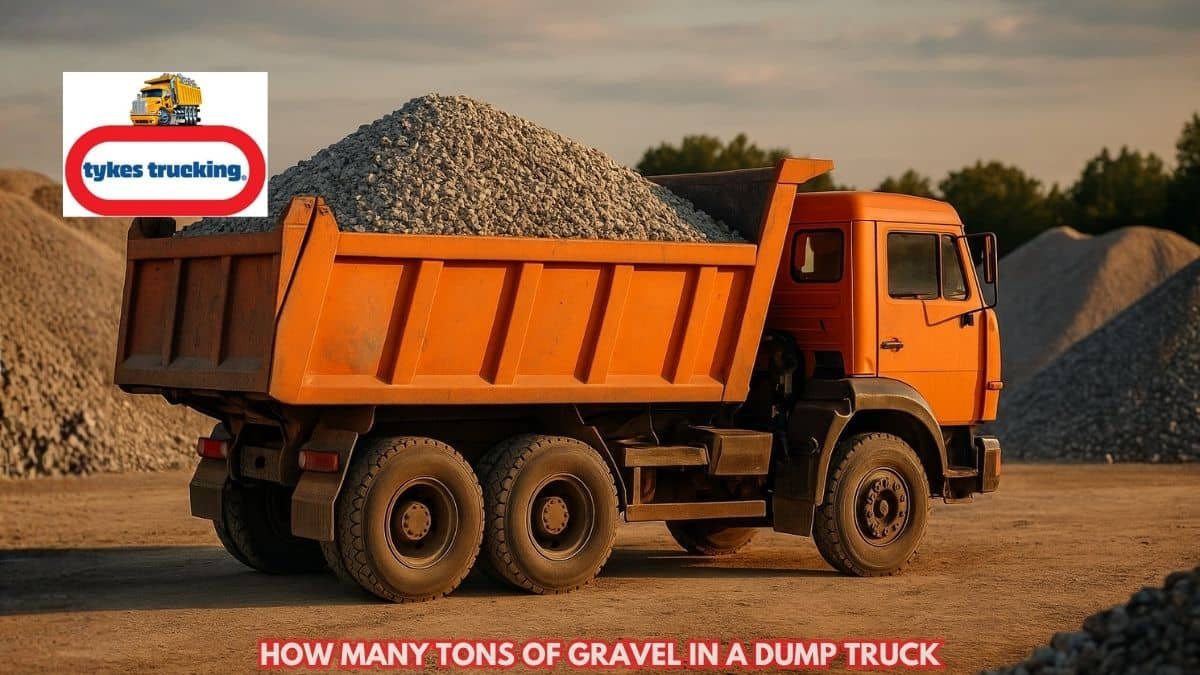
Understanding how many tons of gravel a dump truck can carry helps plan construction and landscaping projects more accurately.
It allows builders and homeowners to estimate the right amount of material needed without wasting time or money.
Each dump truck has a specific carrying capacity that depends on its size, design, and type.
Knowing these limits also helps avoid overloading, which can cause mechanical issues or fines.
With proper planning, gravel transport becomes safe, efficient, and cost-effective.
1. Dump Truck Capacity Range
The capacity of a dump truck usually ranges from 8 to 35 tons, depending on its design, size, and purpose.
A truck’s load capacity is determined by how much weight it can carry safely without putting stress on its frame or engine.
Smaller single-axle trucks handle lighter loads for home or landscaping jobs, while large multi-axle trucks carry heavier materials for road or building projects.
The number of axles, the bed length, and the type of suspension all play an important role in setting the truck’s weight limits.
The size and strength of each tire also affect how much weight the truck can support, since tires must safely bear the load across all axles.
Manufacturers set clear load ratings to prevent overloading that could damage the vehicle or shorten tire life.
Knowing these details helps contractors and drivers choose the right truck for each job and maintain safe hauling practices.
🚚 How to Choose the Right Service for Aggregate Delivery in Marikina
2. Common Dump Truck Sizes
Standard dump trucks usually hold between 7 and 11 cubic yards of gravel.
This volume translates to around 10 to 13 tons of material, depending on gravel type and density.
For smaller projects, a 7-cubic-yard truck is often enough to transport material for short distances.
Larger trucks with greater capacity are used for long hauls or heavy construction work.
Knowing both the cubic yard and ton capacity helps plan deliveries more efficiently.
3. Gravel Density Impact
Gravel density directly affects how many tons a dump truck can carry.
Dense materials, such as crushed granite or limestone, can weigh up to 1.5 tons per cubic yard, while lighter materials like pea gravel weigh closer to 1.3 tons per cubic yard.
The truck may reach its maximum weight capacity before filling up the bed if the material is dense.
Understanding this helps prevent overloading and ensures compliance with safety standards.
Knowing gravel density is essential for calculating both weight and volume for any project.
🚚 How the Weight Of A Dump Truck Affects Its Performance and Safety
4. Types of Gravel Materials
There are many types of gravel used in construction and landscaping, and each has its own weight and purpose.
Pea gravel is made of small, smooth stones that are easy to spread and ideal for pathways or garden beds.
Crushed granite and crushed stone are heavier and more compact, making them strong choices for driveways or road bases.
River rock is rounder and less dense, often used for decorative landscaping or drainage areas.
In some projects, materials like dirt or topsoil are hauled along with gravel to level ground or create planting areas.
Each material has a different weight, which affects how much a dump truck can safely carry per load.
Knowing the properties of these materials helps plan hauling and choose the right gravel type for both strength and appearance.
🚚 Why Tarp Systems For Dump Trucks Are Essential for Preventing Load Spillage
5. Weight Limits and Regulations
Every dump truck must comply with federal and state weight regulations.
These laws set limits on the maximum weight a truck can carry, often based on axle count and gross vehicle weight rating (GVWR).
For example, many states cap the legal truck weight at around 80,000 pounds for highway use.
Exceeding these limits can result in fines, vehicle damage, or unsafe driving conditions.
Following these rules ensures safe transport and protects both the road and the truck itself.
🚚 How Dump Truck Training Can Improve Job Site Safety
6. Gravel Weight Calculation Method
Calculating gravel weight for a dump truck starts by finding out how much volume the truck can hold and the density of the gravel being loaded.
You can use a simple calculator to multiply these values for a quick and accurate estimate.
One cubic yard of gravel usually weighs between 1.3 and 1.5 tons, depending on the material type and moisture content.
Since one cubic yard equals 27 cubic feet, knowing this conversion helps when working with different measurement units.
For instance, a truck that holds 10 cubic yards of gravel weighing 1.4 tons per cubic yard can carry about 14 tons in total.
This method works for all types of aggregates, including crushed stone, pea gravel, or limestone.
Performing this calculation ensures that trucks do not exceed their safe load capacity.
It also helps project planners order the right amount of gravel and prevent costly mistakes during delivery.
🚚 What Are the Biggest Challenges in Oversized Load Trucking?
7. Typical Gravel Load Estimates
A standard dump truck typically carries between 10 and 13 tons of gravel.
This amount can cover about 100 to 130 square feet at a depth of six inches, which is enough for small driveways or foundation bases.
Larger tri-axle trucks may carry 20 to 25 tons for heavy construction use.
The exact number varies depending on gravel density and truck model.
These averages help buyers and contractors estimate how many loads are required for a specific project size.
🚚 Understanding Garbage Truck Width: Why Size Matters in Waste Management
8. Selecting the Right Truck Size
Choosing the right dump truck size helps reduce transportation costs and prevents unnecessary trips.
Small single-axle trucks work best for light residential jobs or short-distance hauls.
Medium-sized trucks, such as tandem-axle models, balance capacity and efficiency for medium-scale projects.
For large jobs, tri-axle or articulated trucks are ideal for hauling heavier loads in fewer trips.
Selecting the right truck saves time, fuel, and maintenance costs while ensuring safe operations.
🚚 Mastering Long-Distance Fragile Trucking: The Gentle Giants
9. Gravel Use in Common Projects
Gravel is one of the most common landscaping materials used in both residential and commercial projects.
It is often spread to build driveways, walkways, and patios because it provides a stable surface that allows water to drain easily.
In gardens and yards, gravel is also used around plants to reduce weeds and keep soil in place.
When used as a base for roads or concrete, gravel must be leveled and compacted to create a firm foundation that will not shift over time.
The amount of gravel needed depends on the project’s size, the type of material chosen, and the desired thickness of the layer.
Choosing the right truck size helps deliver the correct amount of gravel in fewer trips, saving time and fuel.
Proper planning ensures each load of gravel is spread evenly, resulting in durable and well-finished surfaces.
🚚 Construction and Material Hauling by Dump Trucks
10. Cost Factors Based on Load Weight
The cost of gravel delivery often depends on both the material weight and the truck size.
Heavier loads require more fuel and stronger vehicles, which increases delivery costs.
Some suppliers charge by the ton, while others set prices based on the truckload.
Distance, fuel prices, and gravel type can also affect total expenses.
Planning the right load weight helps control costs and prevents budget overruns on large projects.
🚚 Budget-Friendly Dump Truck Options in Marikina
💡 Conclusion
Knowing how many tons of gravel a dump truck can carry ensures better project planning and safer transport.
Factors such as truck capacity, gravel type, and legal weight limits all influence how much material can be moved.
Using accurate calculations helps avoid overloading and unnecessary trips.
Whether for small landscaping jobs or large-scale construction, understanding these details supports efficient, cost-effective work.
With the right knowledge, managing gravel loads becomes simple and dependable.
😉 Our Services
Tykes Trucking Services provides fast and reliable hauling and aggregate delivery for any size project.
We supply and deliver gravel, sand, and other materials right to your site.
Our team ensures safe, on-time deliveries using well-maintained trucks.
For inquiries or bookings, call us at 0917-543-5019, message us on our Facebook page, or use our site’s contact form.
Choose Tykes Trucking Services for dependable service you can trust every time.
❓ FAQs
1. How many tons of gravel can a standard dump truck carry?
A standard dump truck usually carries between 10 and 13 tons of gravel.
This depends on the truck’s size, number of axles, and the type of gravel being transported.
Heavier materials like crushed stone may lower the total volume to stay within weight limits.
Smaller single-axle trucks carry less, while large tri-axle models can haul up to 25 tons or more.
Always check the truck’s load rating before filling it.
2. How can I calculate how much gravel my project needs?
To find out how much gravel you need, measure the area’s length, width, and depth in feet.
Multiply these numbers, then divide by 27 to get the volume in cubic yards.
Multiply the cubic yards by the gravel’s weight per yard, usually between 1.3 and 1.5 tons.
This gives you a close estimate of the total weight needed.
Using this method helps you order the right number of truckloads.
3. What affects how many tons of gravel fit in a dump truck?
Several factors influence a truck’s gravel capacity.
The density of the gravel is one of the most important, as heavier gravel fills the weight limit faster.
The truck’s size and axle configuration also play a major role.
Legal weight limits set by state or federal laws restrict how much can be safely carried.
Weather and road conditions can sometimes limit how full a truck can be loaded.
4. How much gravel will one dump truck cover?
A single dump truck load, usually around 10 to 13 tons, can cover about 100 to 130 square feet at a depth of six inches.
The actual coverage depends on how tightly the gravel is packed and the type of material used.
Lighter gravel may spread farther but provide less base strength.
For larger driveways or roads, multiple loads may be required.
Estimating coverage helps avoid over- or under-ordering materials.
5. Why is it important to follow weight limits when hauling gravel?
Following legal weight limits keeps the truck, driver, and roads safe.
Overloading a dump truck can damage its suspension and brakes, and it may also cause road wear or accidents.
Most states limit trucks on highways to around 80,000 pounds gross weight, including the truck and load.
Staying within this limit prevents fines and costly repairs.
Safe loading ensures efficient and legal gravel delivery.