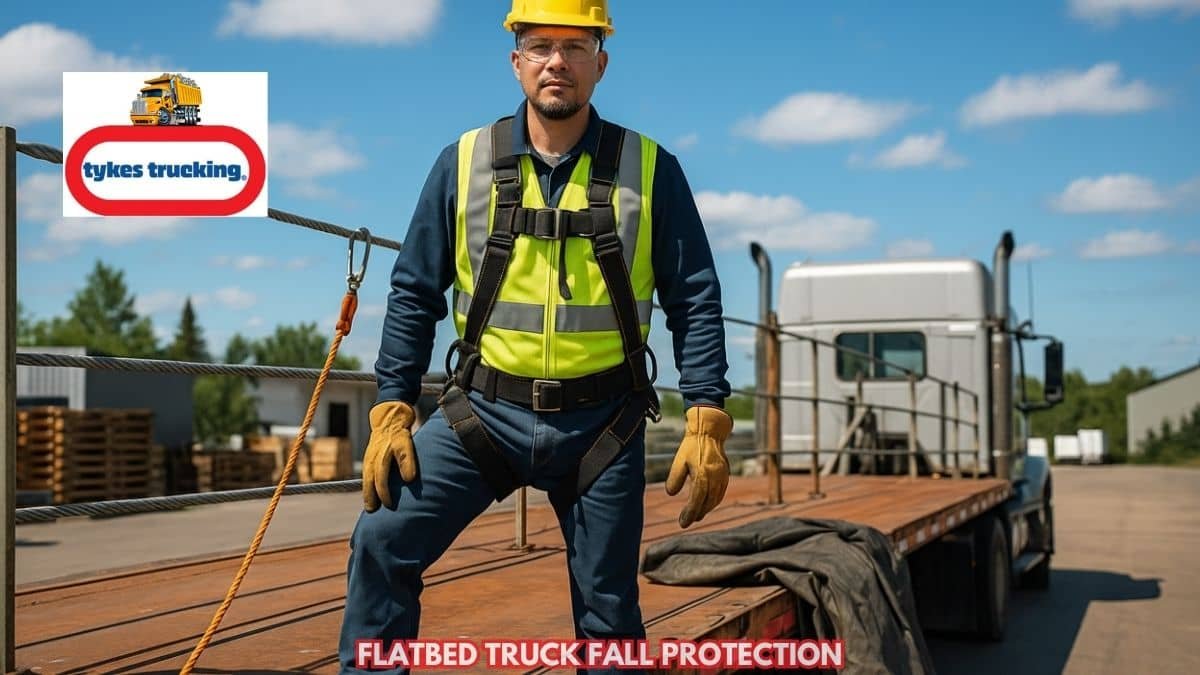
Flatbed trucks expose workers to fall risks because the surface is open and raised off the ground.
Many tasks on a flatbed require moving around heavy loads and uneven areas, which can lead to serious injuries if safety steps are ignored.
Strong flatbed truck fall protection helps workers stay safe while handling loads, securing gear, and completing daily tasks.
Crews need clear rules, proper equipment, and steady training to prevent falls in these high-risk areas.
We’ll explain the key steps that help protect both the workers and the loads they handle.
1. Know the Rules: Understanding Fall Protection Regulations
Understanding fall protection regulations is key to ensuring the safety of workers and avoiding legal penalties.
These regulations outline the necessary equipment and practices for trailer fall protection, especially during loading and unloading tasks.
For instance, federal guidelines often require guardrails, harnesses, or safety nets when working on elevated surfaces like truck and trailer beds.
Familiarizing yourself with both local and federal regulations ensures your safety protocols meet current standards.
Additionally, knowing these rules helps in choosing the right fall protection gear and setting up effective systems for different operations.
Regularly reviewing and updating your procedures is important, as regulations can change over time.
This ongoing commitment helps keep both your crew and your operations safe and compliant.
🚚 What Happens at the Back of the Garbage Truck? Understanding the Mechanisms
2. Guarding Your Crew: Choosing the Right Fall Protection System
Selecting the right fall protection system starts with understanding the specific needs of your operation and the tasks your crew performs each day.
You should consider the type of load, the work environment, and the number of workers on the site because these details affect which trailer fall protection systems will work best.
A good system supports truck fall prevention by giving workers steady support as they move around the flatbed.
The right setup will also give your team comfort so they can focus on their tasks without worrying about sudden slips or loss of balance.
It is helpful to compare different options, such as guardrails, harnesses, and safety nets, to see which one fits your work style.
Some jobs may require more than one system to provide full coverage and enhanced safety for the crew.
You should also think about how easy the system is to inspect and use because workers need something they can rely on every day.
Investing in a suitable fall protection system keeps your crew safe and helps prevent serious injuries.
🚚 How to Choose the Right Reefer Truck Rental for Your Needs
3. Safe Steps for Tarping and Untarping
Tarping and untarping are common parts of flatbed tarping, but they can be dangerous because workers often move around high or uneven areas on the truck.
Using a tarping station gives workers a level surface and helps reduce slips and falls while working on a flatbed.
Workers should avoid walking on uneven or unstable loads because these surfaces can shift without warning and cause a loss of balance.
It is also important to check the load before starting to make sure there are no loose items that could move during the process.
Heavy tarps should be lifted slowly and with help from others so no one is put in an unsafe position.
Crews should plan their steps ahead of time to avoid sudden movements that can lead to falls.
If the weather or work area makes tarping unsafe, workers should wait until the conditions improve or choose a safer method.
These steps support strong flatbed fall protection by helping workers stay steady and aware while handling tarps.
🚚 How Does Dump Truck Exhaust Affect Air Quality On Construction Sites?
4. Essential Footwear and PPE for Fall Safety
Proper footwear and personal protective equipment (PPE) are essential for preventing falls and injuries on flatbed trucks.
Non-slip, steel-toed boots provide excellent traction and protect your feet from injuries.
Gloves ensure a secure grip when handling loads, reducing the risk of accidents.
High-visibility clothing makes you more visible, especially in low-light conditions, enhancing overall safety.
Also, helmets protect your head from impacts caused by falling objects, and maintaining your PPE ensures it remains effective and reliable.
🚚 Heavy Hauling Services in Marikina: What You Need to Know Before Hiring
5. Guardrails 101: Securing Your Flatbed Perimeter
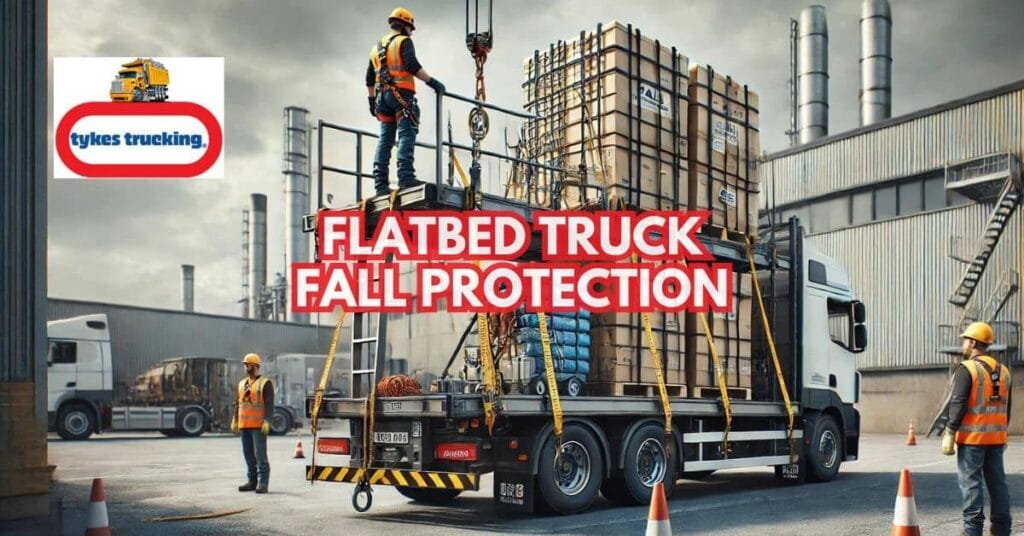
Guardrails are an effective way to prevent falls because they place a strong barrier along the open edges of a flatbed trailer.
These barriers help workers stay within safe areas and lower the chance of slipping off the side.
To work well, guardrails must be installed correctly and checked often to confirm they stay tight and stable.
Each guardrail should be strong enough to hold up against the force of a fall without bending or breaking.
Workers should look for signs of rust, loose parts, or bends that may weaken the guardrail.
Fixing any damage right away helps keep the guardrails reliable for everyday use.
🚚 How to Come Up with Catchy Dump Truck Names for Your New Rig
6. Harnessing Safety: Understanding Personal Fall Arrest Systems (PFAS)
Personal Fall Arrest Systems (PFAS) are crucial for individual worker safety on flatbeds.
These systems typically include a harness, lanyard, and anchor point, all designed to stop a fall and minimize injury.
Proper use and fitting of PFAS are essential to ensuring they work effectively during a fall.
Workers must be trained on how to correctly wear and use PFAS.
Regular inspection and maintenance of PFAS components help to identify and address any wear or damage, ensuring ongoing protection.
🚚 The Essential Guide to Tank Truck Loading Gantries: Ensuring Safe and Efficient Tank Truck Loading
7. Anchoring for Success: Selecting Strong Anchor Points
Anchor points are the foundation of any fall protection system, providing the necessary support during a fall.
It is essential to select certified anchor points that can withstand the forces generated in a fall situation.
The placement of anchor points should be strategic, ensuring they are within reach and can provide adequate support.
Regular inspection of anchor points for any signs of wear, corrosion, or damage is crucial.
Ensuring the strength and reliability of anchor points is vital for the effectiveness of the entire fall protection system.
🚚 How to Choose the Right Dump Truck Hauling Services in Marikina for Your Needs
8. Training for Teamwork: The Importance of Fall Protection Training
Effective fall protection requires comprehensive training for all crew members.
Training should cover the correct use of fall protection equipment, emergency procedures, and the importance of teamwork.
Well-trained crews are more likely to identify and mitigate potential hazards.
Continuous training sessions help reinforce safety practices and update workers on new regulations and equipment.
A well-informed team is better equipped to prevent falls and respond effectively if an incident occurs.
🚚 Understanding Tank Truck Hoses: Types, Uses, and Maintenance
9. Keeping Watch: Inspection and Maintenance of Fall Protection Equipment
Regular inspection and maintenance of fall protection equipment are vital for ensuring its effectiveness.
Before each use, equipment should be checked for any signs of wear, damage, or malfunction.
Proper care and storage of equipment also play a role in maintaining its functionality and extending its lifespan.
Any damaged or worn equipment should be repaired or replaced immediately to prevent accidents.
Consistent maintenance routines help ensure that fall protection systems are always ready to provide the necessary safety.
🚚 How to Choose a 26-Foot Flatbed Trailer for Your Business
10. Safety Beyond the System: Additional Fall Prevention Measures
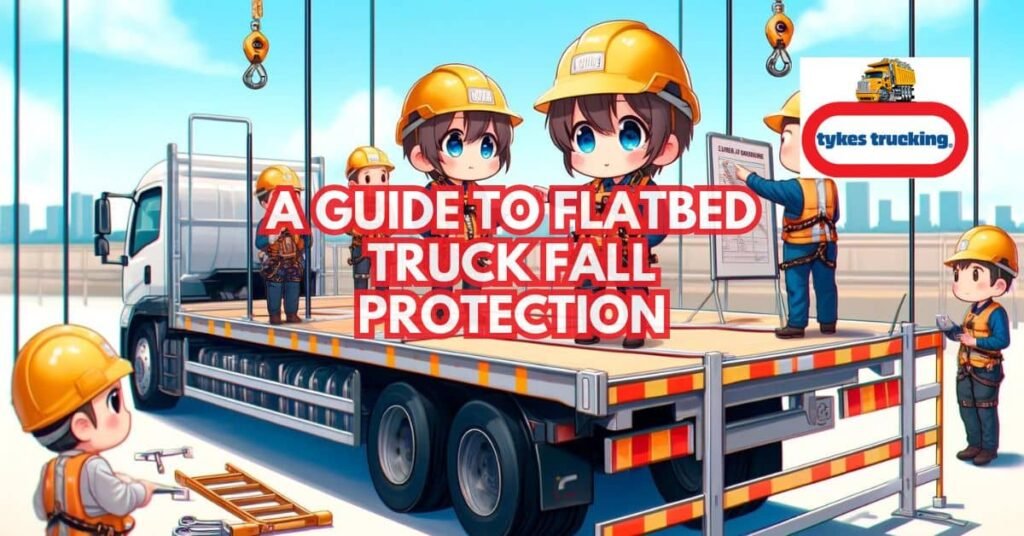
Implementing additional safety measures beyond the fall protection system enhances overall safety.
Clear communication among crew members helps identify and address potential hazards promptly.
Properly securing loads reduces the risk of shifting, which can lead to falls.
Good housekeeping practices, such as keeping walkways clear of obstacles, further minimize fall risks.
These supplementary measures work in tandem with fall protection systems to create a safer work environment.
🚚 Reefer Container Troubleshooting: A Cool Guide to Keeping Your Cargo Fresh
11. Building a Culture of Safety: Empowering Your Crew to Prevent Falls
Creating a safety-first culture involves active participation from all crew members.
Encourage open communication about safety concerns and potential hazards.
Regularly reinforce the importance of following safety protocols and using fall protection equipment correctly.
Empowering crew members with knowledge and responsibility fosters a proactive approach to preventing falls.
A strong safety culture leads to a more vigilant and safety-conscious team.
🚚 Transporting Aggregates with Dump Trucks
12. Emergency Preparedness: What to Do in Case of a Fall
Despite all precautions, falls can still occur, making emergency preparedness crucial.
Ensure all crew members are familiar with the procedures for assisting fallen workers.
This includes knowing how to safely lower a suspended worker and administer first aid if necessary.
Quick and effective communication with emergency services can make a significant difference in the outcome.
Having a clear, practiced emergency plan helps minimize the impact of fall incidents.
🚚 Expert Bulk Hauling Services Using Dump Trucks in Marikina City
💡 Conclusion
Continuous improvement in fall protection practices is essential for long-term safety.
Regularly review and update safety protocols based on new insights, feedback, and regulatory changes.
Encourage ongoing training and education for all crew members to keep their safety knowledge current.
By making fall protection a dynamic, evolving process, you ensure the well-being of your crew.
Keeping safety a top priority leads to more efficient operations and a safer work environment for everyone.
❓ FAQs
1. What are the most common fall hazards on a flatbed truck?
The most common hazards include walking on uneven loads and working near open edges.
These areas make it easy to lose balance, especially when the load shifts.
Good planning and safe work steps help lower these risks.
2. When should workers use a Personal Fall Arrest System (PFAS)?
Workers should use a PFAS any time they work at a height where a fall could cause serious harm.
This includes loading, securing, or tarping loads that place them near the edge.
Proper fitting and training make the system work as it should.
3. How often should fall protection equipment be inspected?
Equipment should be checked before each use to find problems like cuts, wear, or broken parts.
Crews should also follow a regular schedule for deeper inspections.
Replacing damaged gear right away helps prevent accidents.
4. What should workers do if the weather makes flatbed work unsafe?
Workers should stop and look at the conditions to see if it is safe to continue.
Strong wind, rain, ice, or poor light can make slips and falls more likely.
Waiting for better conditions or using safer tools and setups is the best choice.
5. Why is training important for flatbed truck fall protection?
Training teaches workers how to use their equipment and spot dangers before they cause harm.
It also helps crews work together and follow the same safety steps.
Regular training keeps everyone aware of changes in rules and tools.
😉 Our Services
Looking for reliable aggregate delivery and hauling services?
Choose Tykes Trucking Services for all your transportation needs.
Our expert team ensures timely and safe deliveries every time.
Contact us at 0917-543-5019, via our Facebook page, or through our website’s contact form.
Trust Tykes Trucking Services for efficiency and professionalism in every load.