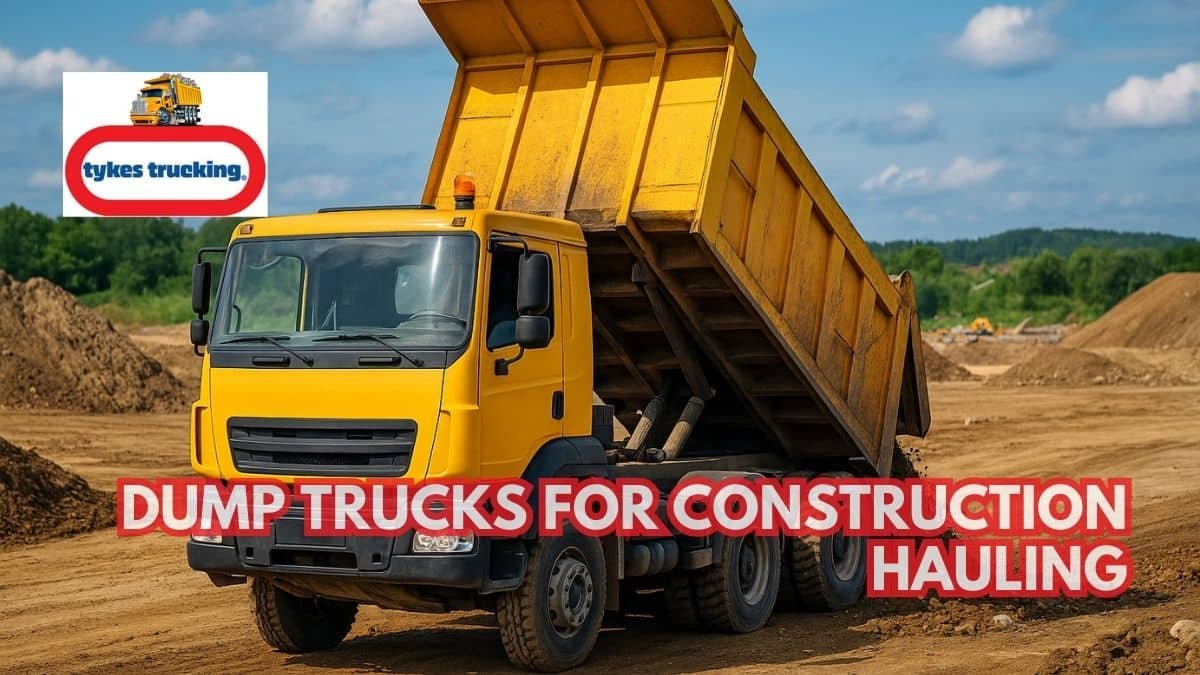
Dump trucks for construction hauling are powerful machines that move large amounts of material on job sites.
Their size and weight make them useful but also risky if not handled properly.
Workers, operators, and site managers must pay attention to safety from the start of every project.
Small mistakes can lead to major accidents that slow progress and hurt people.
We’ll explain why safety is important and how to reduce hazards when using dump trucks.
1. Operator Training And Certification
Every operator needs proper training and certification before driving a dump truck.
Certified training programs teach drivers how to handle heavy loads and control the truck in different site conditions.
These programs also explain the right actions to take in emergencies, which helps prevent small problems from becoming serious accidents.
A trained operator can recognize risks early and make safer choices that protect both people and equipment.
Proper training also improves productivity because skilled drivers work more efficiently and reduce downtime caused by errors.
Without certification and training, both the operator and nearby workers face much greater risks on the job.
🚚 Conquering Your Construction Project: The Essential Guide to Construction Hauling Services
2. Compliance With Safety Regulations
Construction sites must follow strict rules for vehicle use.
These regulations set clear standards for machine maintenance, load handling, and worker protection.
They also help companies stay accountable to legal requirements.
Following these rules reduces accidents and prevents delays caused by investigations or fines.
Strong compliance shows a company’s commitment to keeping workers safe.
🚚 Millimeters Matter: The Importance of Garbage Truck Turning Radius in Tight Streets
3. Pre-Operation Vehicle Inspections
Before starting work, drivers should check the dump truck carefully.
Inspections include looking at brakes, tires, lights, and hydraulic systems.
Finding damage early prevents the truck from failing during use.
Checking fluid levels and warning signals also helps keep the truck reliable.
A short inspection can save lives and avoid costly repairs.
🚚 Why a Flatbed Truck Tent Is the Ultimate Game Changer for Outdoor Enthusiasts
4. Load Securement And Even Distribution
Loads must be secured and spread evenly in the truck bed to keep the vehicle stable during travel.
Shifting material, such as gravel or asphalt, can cause the truck to lean and lose balance, especially on uneven ground.
Uneven weight also increases the chance of tipping when the bed is raised for dumping.
Using straps, covers, or sideboards ensures that loose material stays in place throughout the trip.
This practice is important whether the truck is hauling directly or pulling a trailer with additional loads.
Balanced and secure loads reduce stress on the truck’s frame and tires, helping extend its service life.
Proper load control not only improves safety but also makes the truck easier to steer and operate in busy work areas.
🚚 Why Investing in Commercial Truck Accessories Pays Off Long Term
5. Use Of Spotters And Communication
Spotters guide trucks when space is limited and blind spots are large.
They help drivers avoid workers, structures, and other machines.
Clear communication between drivers and spotters is key to safety.
Radios, headsets, or hand signals give everyone the same message.
Without spotters, drivers may not see dangers until it is too late.
🚚 Don’t Get Caught Off Guard: An Essential Guide to Dump Truck Height Clearance
6. Visibility And Blind Spot Awareness
Dump trucks have large blind spots that make it hard for drivers to see nearby workers.
Mirrors and cameras are needed to monitor these hidden areas.
Workers on foot should avoid standing close to moving trucks.
Drivers must always check their surroundings before moving or dumping.
Awareness of blind spots lowers the chance of serious accidents.
🚚 Conquering the Can: The Power of the Garbage Truck With Arm
7. Safe Dumping Practices
Dumping material requires careful attention to ground conditions.
Trucks should only dump on firm and level ground to avoid tipping over.
Operators need to check for overhead wires or obstacles before raising the truck bed.
No one should stand behind or beside a truck while it is dumping.
Safe dumping habits reduce accidents and keep work areas organized.
🚚 What to Look for When Hiring Construction Dump Truck Services for Your Project
8. Traffic Control And Site Safety Planning
Dump trucks move through areas with workers, machines, and equipment nearby.
Traffic control plans create clear travel paths to limit confusion.
Signs, barriers, and designated lanes guide both drivers and workers.
Site planning makes sure dumping zones are away from crowded work areas.
Organized movement reduces the risk of collisions and injuries.
🚚 Can Upgrading Flatbed Truck Tail Lights Improve Nighttime Visibility?
9. Safety Technologies And Alarms
Modern dump trucks often come with advanced safety systems.
Backup alarms alert workers when the truck is reversing.
Cameras and sensors give drivers better awareness of their surroundings.
Some trucks also use stability monitors to warn of tipping risks.
These technologies support safe driving but do not replace careful habits.
🚚 Hauling Services via Dump Trucks
10. Personal Protective Equipment And Safety Culture
Workers near dump trucks should wear protective gear like helmets, gloves, and reflective vests.
These items make them easier to see and protect them from falling material.
A strong safety culture means workers and managers value safe practices every day.
This culture encourages people to report hazards instead of ignoring them.
When safety is part of daily work, accidents become less common.
🚚 Affordable Dump Truck Rentals in Marikina City
💡 Conclusion
Dump trucks for construction hauling are essential, but they also bring serious risks if not handled safely.
Training, planning, inspections, and communication all play key roles in reducing accidents.
Safety technologies and protective gear give workers extra layers of protection.
A strong culture of responsibility makes sure everyone on site takes safety seriously.
By focusing on safety, construction sites can protect workers and keep projects moving forward.
😉 Our Services
Tykes Trucking Services delivers aggregates and offers reliable hauling for your projects.
Our team moves sand, gravel, and other materials safely and on time.
We serve building sites, road work, and home projects with fair rates.
To book a truck or get a quote, call 09175435019.
You can also message our Facebook page or send a note through the site contact form.
❓ FAQs
1. What is the minimum required training for a dump truck operator?
In the Philippines, an operator must hold a professional driver’s license with a specific restriction code for the type of vehicle.
For a heavy vehicle like a dump truck, this is typically a professional driver’s license with a restriction code 8.
The operator must also have undergone training on the safe operation and maintenance of heavy equipment, which is often provided by the company or a third-party training center to comply with safety standards set by government bodies like the Department of Labor and Employment (DOLE).
2. How often should a dump truck be inspected to ensure it is safe?
A full, documented pre-operation inspection should be conducted daily.
This check includes a walk-around to inspect tires, brakes, lights, and fluid levels.
A more thorough maintenance inspection should also be scheduled regularly, as per the manufacturer’s recommendations and regulatory standards, to check all hydraulic and mechanical systems.
3. What are the most common causes of dump truck accidents on construction sites?
The most frequent causes include tipping over due to uneven ground or improperly distributed loads, collisions with other vehicles or equipment, and striking pedestrians in large blind spots.
These accidents often result from a combination of poor communication, inadequate training, and a lack of site planning.
4. How can workers on foot stay safe around operating dump trucks?
Workers should always wear high-visibility clothing to be easily seen.
They must also maintain a safe distance from moving trucks, avoid blind spots, and make direct eye contact with the operator before approaching a stationary vehicle.
Communication with the operator is also crucial.
5. Are there different safety considerations for various types of dump trucks?
Yes.
Articulated dump trucks, for example, have a flexible joint that requires different handling on uneven terrain.
Standard rigid-body trucks have a different turning radius and can be more prone to tipping on soft ground.
Operators must be trained on the specific safety protocols for the type of truck they are using.