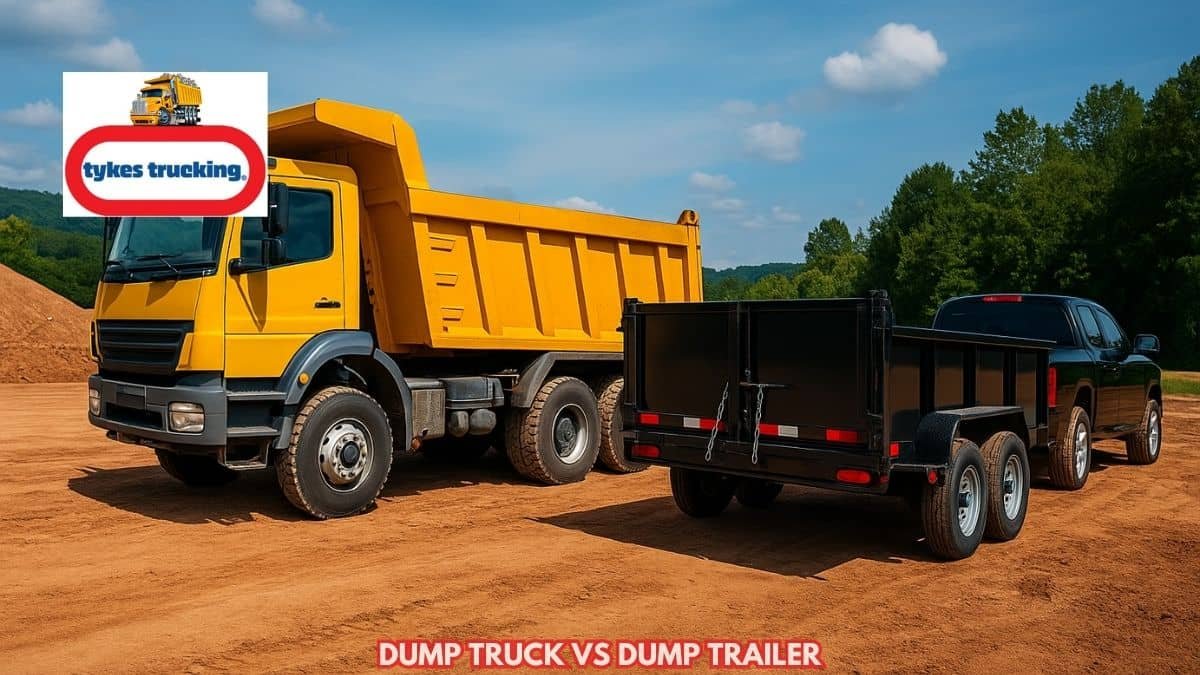
When comparing a dump truck vs dump trailer, it is important to understand how each option meets different hauling needs.
A dump truck is a single, self-powered unit built for larger jobs and rougher ground, while a dump trailer depends on a towing vehicle but offers more flexibility and fuel savings.
The right choice depends on the size of your loads, the type of materials you move, and the places where you work.
Considering how much you haul, how often you haul, and how far you travel will help narrow down the best fit.
We’ll explain the main differences between dump trucks and dump trailers so you can choose the one that supports your work most efficiently.
1. Hauling Muscle vs. Hauling Might: Capacity Considerations for Dump Trucks vs. Trailers
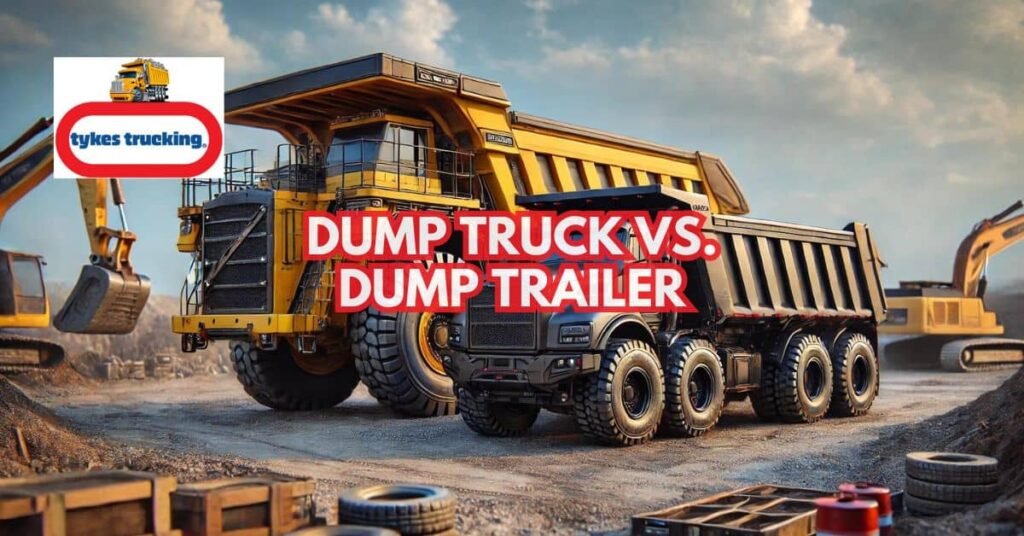
Dump trucks, with their powerful engines and heavy-duty axles, are designed to carry substantial loads like dirt, gravel, and demolition debris, making them essential for high-demand construction and mining tasks.
These trucks are well-suited for jobs requiring hauling might, as their axles can support heavier weights over rough terrain.
However, for lighter materials like mulch, often used in landscape projects, a dump trailer may be a better option.
Dump trailers are more versatile, offering flexible hauling capacity while being easier to attach to a variety of towing vehicles.
This makes them ideal for landscape companies that need to transport mulch, soil, or other less dense materials.
With fewer axles and lighter construction, dump trailers are also more fuel-efficient and maneuverable.
Choosing between a dump truck and a dump trailer ultimately comes down to the type of material, load size, and operational environment of your project.
🚚 Why Dump Truck Hauling is the Right Choice
2. Choosing the Right Loading Setup for Dump Trucks and Trailers
The height of the truck bed or trailer sides affects what type of loader or excavator can fill it safely and efficiently.
A bed that is too high may slow down work or cause spillage if the loading equipment cannot reach it easily.
Gate styles such as swing or barn doors and spreader chains change how materials are released and controlled during unloading.
Some trailers also include ramps that make it easier to load small machines or materials from the ground.
Matching your dump equipment with the right loader and access setup helps prevent delays and keeps job sites running smoothly.
🚚 How to Select the Best Dump Truck Hauling Services in Cainta
3. Tight Squeeze? Tight Spot? Maneuverability and Job Site Navigation
When deciding whether to get a dump truck or buy a dump trailer, maneuverability plays a crucial role, especially in tight or crowded job sites.
Dump trucks, with their large size and fixed structure, can be difficult to navigate in confined areas, making them less ideal for small or complex layouts.
In contrast, dump trailers are more flexible, as they can be unhitched and left at the site, allowing the tow vehicle to handle other tasks or reposition easily.
This feature is particularly useful for unloading in tight spots, where the trailer can be positioned perfectly without the need for constant adjustments.
If you plan to get a dump truck, be aware that driving it typically requires a commercial driver’s license (CDL), which adds another consideration.
For jobs on open or expansive sites, dump trucks offer faster and more efficient hauling, but dump trailers are better suited for smaller, harder-to-navigate locations.
The choice between the two depends on your site conditions, driving requirements, and operational needs.
🚚 What to Look for When Choosing a Dump Truck Rental Service
4. All You Need is One: The Independent Hauling Advantage of Dump Trucks
Dump trucks offer a unique advantage due to their self-contained design, allowing them to operate independently without needing separate equipment like a loader or towing vehicle.
This eliminates the time-consuming process of hooking up trailers, making them ideal for jobs that require fast turnarounds.
A dump truck driver can quickly move materials from site to site with no need to detach a trailer or rely on additional machinery.
Inside the cab, the driver has full control over the truck and its load, streamlining operations and improving efficiency on demanding job sites.
This independence reduces maintenance costs since there are fewer moving parts compared to a dump trailer setup.
Additionally, without the need for separate loaders, dump trucks simplify logistics, making them particularly beneficial for businesses with multiple projects.
For operations that prioritize speed and self-sufficiency, dump trucks are a convenient and reliable choice.
🚚 Starting a Trucking Business Checklist: What You Need to Know Before Hitting the Road
5. Owning vs. Renting: Exploring Cost Considerations for Your Needs
Deciding whether to own or rent a dump truck or trailer hinges on the frequency and duration of your usage.
Owning equipment can lead to higher upfront costs but offers long-term savings and availability whenever needed.
Renting, however, can be a cost-effective option for short-term projects or when the need for such equipment is occasional, avoiding the long-term commitment and maintenance expenses.
This flexibility in managing capital expenditure can be crucial for smaller businesses or startups.
Always consider your financial strategy and project demands when choosing between owning and renting to optimize cost efficiency.
🚚 The Best Trucks for Hauling Horse Trailers: What to Look For
6. Evaluating Environmental Impact and Fuel Efficiency: Dump Trucks vs. Dump Trailers
When comparing dump trucks and dump trailers, it’s important to look at how each option affects the environment and fuel usage.
Dump trucks are usually heavier and less fuel-efficient because their engine and load-carrying structure are combined into a single, large vehicle.
This design results in higher fuel consumption and a greater environmental impact, especially over long distances.
On the other hand, dump trailers are towed by separate vehicles, which can be selected for better fuel efficiency and lower emissions.
For businesses, considering these differences can help them reduce costs and lessen their environmental footprint while still meeting their operational needs.
🚚 Understanding the Mechanics of the Garbage Truck Hydraulic System: How It Works and Why It Matters
7. Hydraulic Hustle vs. Manual Might: Unloading Efficiency in Dump Trucks and Trailers
Dump trucks typically feature hydraulic systems that allow for quick and powerful unloading, reducing downtime and increasing productivity on job sites.
These systems are especially beneficial when time constraints are tight and multiple loads need to be managed swiftly.
In contrast, many dump trailers employ manual mechanisms or less powerful hydraulics and are better suited for situations where unloading speed is less critical.
This simplicity can also mean fewer mechanical issues and lower maintenance costs.
Assessing your priority between speed and cost will guide you in choosing between the efficiency of hydraulic systems and the economical nature of manual options.
8. Material Matchup: How Versatility Differs Between Dump Trucks and Trailers
Dump trucks are built for strength and can move many kinds of materials, from gravel and sand to larger items like broken concrete or stone.
They are made to handle rough ground and could haul very heavy loads without losing stability or power.
Their strong frame and engine design make them ideal for tough construction work where both weight and distance matter.
Dump trailers, while not as strong, are easier to pair with different towing vehicles, making them practical for smaller jobs or mixed-use tasks.
A trailer could haul materials such as mulch, soil, or debris when a large truck is not necessary.
They also work well when careful handling or frequent site changes are required, such as in landscaping or light demolition projects.
Choosing between them depends on the type of materials you move, how much weight you need to carry, and how often your work conditions change.
🚚 Understanding the Different Types of Dump Trucks and Their Uses
9. Flexibility on Demand: Dump Trailers for the Occasional Hauler
For those who do not need a full-time hauling solution, dump trailers offer significant advantages.
They can be hitched to different vehicles, making them a versatile option for businesses with fluctuating needs or those who manage a variety of projects.
This flexibility allows companies to adapt quickly without the need for a dedicated vehicle, reducing idle equipment costs.
Dump trailers are also ideal for businesses that require equipment to be shared across various tasks or locations.
Opting for a dump trailer can provide practical benefits while managing resource allocation efficiently.
🚚 How to Optimize Dump Truck Fuel Consumption Per Hour for Cost Savings
10. The Power of Your Tow Vehicle: Attach and Go with Dump Trailers
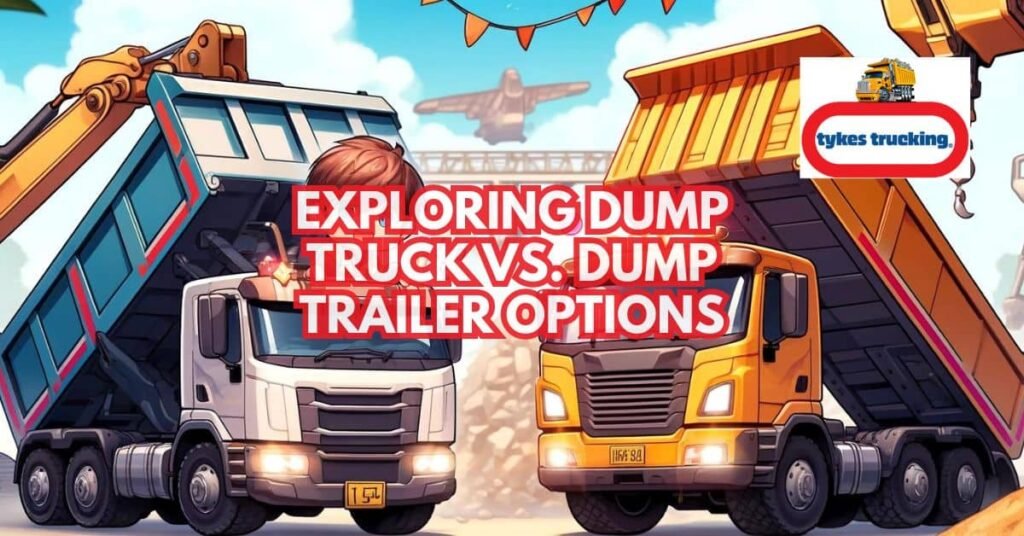
The utility of dump trailers is heavily dependent on the capacity and robustness of the tow vehicle.
The towing vehicle must have adequate horsepower and torque to handle the combined weight of the trailer and its load.
This ensures safety and efficiency in transport without overburdening the vehicle.
Moreover, the compatibility of the hitch system and the brake setup between the trailer and the tow vehicle must be checked to guarantee secure connections.
Choosing the right tow vehicle extends the versatility and functionality of your dump trailer, allowing for smoother operations across various hauling tasks.
🚚 How to Choose the Right Dump Truck Hauling Services in the Philippines for Your Needs
11. Keeping It Running: Maintenance Considerations for Trucks vs. Trailers
Maintaining a dump truck typically involves more comprehensive servicing, including engine checks, hydraulic system maintenance, and regular inspections of the chassis and electrical systems.
In contrast, dump trailers require less frequent maintenance, mainly focusing on the integrity of the frame, the condition of the wheels and bearings, and the functionality of the coupling mechanism.
However, because trailers rely on a tow vehicle, maintenance must also include the vehicle’s readiness to handle the trailer.
Regular, proactive maintenance ensures both dump trucks and trailers operate reliably and last longer.
Balancing these maintenance demands with operational needs can influence the decision between owning a dump truck or a trailer.
🚚 Moving Aggregates by Dump Truck
12. Finding Your Perfect Match: A Guide to Choosing Between Dump Trucks and Trailers
Selecting between a dump truck and a dump trailer involves evaluating several key factors: the nature of the materials you frequently transport, the typical conditions of your job sites, and your budgetary constraints.
Consider the volume and weight of the loads, as dump trucks are better for heavier, more abrasive materials, while trailers are suited for lighter, bulkier items.
Think about access to job sites; trailers might be preferable for tighter spaces or varying locations.
Assess how often you’ll use the equipment, as this might influence whether you choose to buy or rent.
Engaging with industry experts and seeking advice from peers can also provide practical insights that align with your specific operational requirements.
🚚 Dump Truck Transport Solutions in Marikina
💡 Conclusion
Making an informed decision between a dump truck and a dump trailer is essential for optimizing your operational effectiveness and financial efficiency.
By considering factors such as load requirements, site access, budget, and frequency of use, you can choose the option that best fits your business needs.
Remember that each choice carries its own set of benefits and limitations, so select the one that aligns most closely with your daily operations and long-term goals.
Ultimately, the right choice will not only meet your current needs but also support your business’s growth and adaptability.
😉 Our Services
Looking for reliable aggregate delivery and expert hauling services?
Tykes Trucking Services is here to meet all your needs efficiently and affordably.
We specialize in transporting a wide range of materials with precision and care.
Connect with us today at 0917-543-5019, message us through our Facebook page, or contact us through our website to schedule your service.
Trust us to handle your hauling requirements with professionalism and expertise.
❓ FAQs
1. What is the main difference between a dump truck and a dump trailer?
A dump truck is a single vehicle with its own engine that carries and dumps materials on its own.
A dump trailer, on the other hand, must be towed by another vehicle.
The trailer can often carry lighter loads and is easier to move around in small spaces.
2. Which is better for large construction projects, a dump truck or a dump trailer?
A dump truck is better for large projects because it can handle heavier loads and rough ground.
Its strong frame and built-in power make it ideal for heavy materials like rock or concrete.
Dump trailers are better for smaller loads or short-distance hauling.
3. Can I tow a dump trailer with any vehicle?
No.
The towing vehicle must have enough engine power, towing capacity, and proper hitch equipment to handle the trailer and its load.
Always check the weight limits and braking setup to make sure it is safe and legal to tow.
4. Which option costs less to maintain, a dump truck or a dump trailer?
Dump trailers usually cost less to maintain because they do not have engines or complex systems.
Dump trucks need more frequent servicing, including engine, hydraulic, and electrical checks.
However, trucks are faster and more efficient for heavy or repeated use.
5. How do I decide between buying a dump truck or a dump trailer?
Think about how often you need to haul materials, how heavy your loads are, and what kind of job sites you work on.
If you move large or heavy materials daily, a dump truck is a better choice.
If your hauling needs change from project to project, a dump trailer offers more flexibility and lower costs.