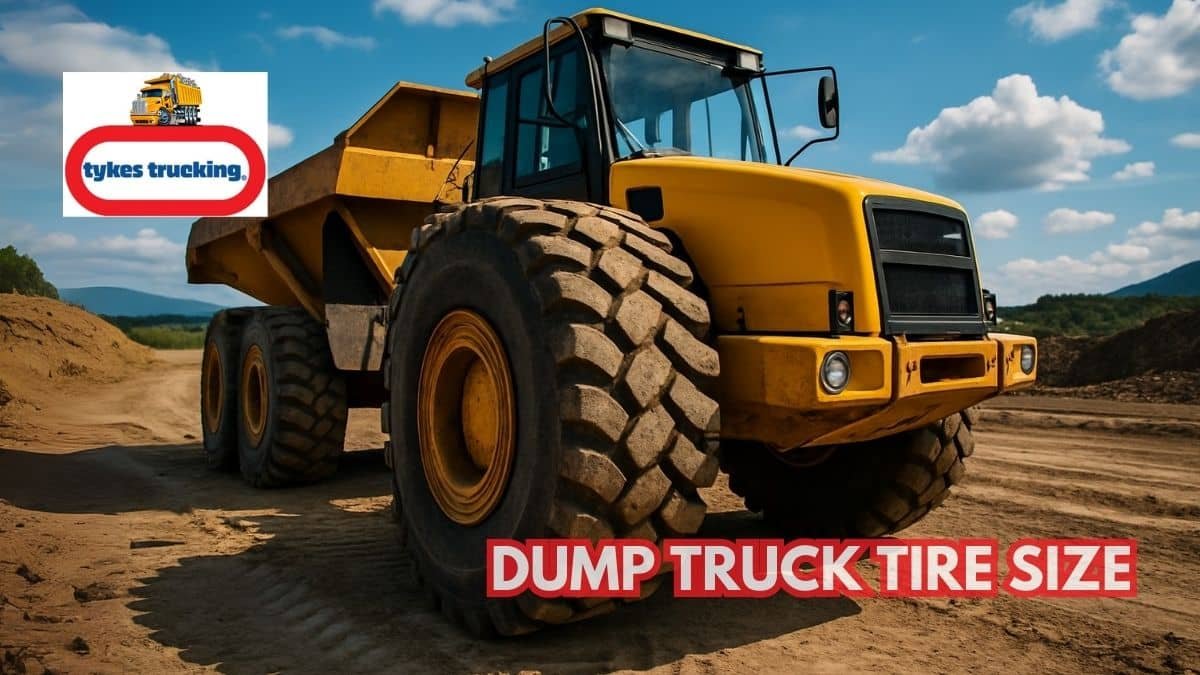
Dump truck tire size plays an important role in how well a truck performs and how much it costs to operate.
The size of the tires affects how much weight the truck can carry, how safe it is on different roads, and how much fuel it uses.
Larger tires may provide better traction and durability, but they can also increase fuel use and require a higher initial investment.
Smaller tires may be less expensive, but they can wear out faster or limit performance in heavy-duty conditions.
Understanding the impact of tire size helps truck owners and operators make choices that balance cost, safety, and efficiency.
1. Breaking Down the Numbers: Dump Truck Tire Size Explained
Dump truck tire sizes are specified using a combination of numbers and letters that describe the tire’s dimensions and capabilities.
The first number typically represents the tire’s width in millimeters, while the second number indicates the aspect ratio, which is the height of the sidewall as a percentage of the width.
The final number often denotes the diameter of the wheel the tire is designed to fit.
Understanding these measurements is essential for selecting the right tire, as they determine the tire’s load capacity and overall fit.
Knowing how to read these numbers ensures that you choose tires that match your dump truck’s specific needs and operating conditions.
🚚 Trucking and Hauling Services in the Philippines
2. Load and Speed: Essential Tire Specifications
The load-carrying capacity of a dump truck tire is directly related to its size, with larger tires generally able to support more weight without strain.
This is especially important for trucks that haul stone, soil, or other heavy materials over long distances, where consistent strength is required.
Tire size also influences speed ratings, which set the safe maximum speed a truck can travel while carrying a load.
For an articulated dump truck, the correct tire size is critical because these trucks often work on uneven ground and must carry heavy loads while still maintaining safe handling.
Selecting a tire that matches both the load and speed needs helps the truck operate smoothly, improves fuel use, and reduces the chance of mechanical problems.
Balancing these factors with the right tire choice keeps operations efficient while protecting the truck from unnecessary wear.
🚚 How Does a Dump Truck Tailgate Lock Enhance Safety on Construction Sites?
3. Grip and Stability: How Tire Size Affects Your Haul
Tire size significantly influences the grip and stability of a dump truck, especially when driving across rough or uneven terrain.
Larger tires usually provide stronger traction, which is needed for off-road areas where mud, gravel, or loose soil can cause slipping.
Using a radial tire can improve grip even further because its flexible design allows the tread to stay in better contact with the ground.
This reduces the chance of losing control and helps the truck remain steady while carrying heavy loads.
The right tire size also improves stability when the truck turns on curves or climbs uneven surfaces, keeping both the vehicle and cargo safe.
Choosing tires with the correct size and a design suited to the ground conditions is essential for safe and efficient operations.
🚚 Flatbed Truck Stake Sides: Safety and Security Combined
4. Terrain-Specific Tire Size Considerations
Dump trucks work in many different places, and each type of ground can affect how tires perform.
On smooth urban roads, smaller or standard tires may be more cost-effective and provide enough grip.
In mining sites or quarries, larger tires with stronger treads are often needed to handle rocks and uneven ground.
Construction sites may require tires that balance both strength and flexibility for mixed surfaces.
Choosing the right tire size for the terrain helps reduce wear, improve safety, and lower operating costs.
🚚 Know Your 40-Foot Flatbed Trailer Dimensions: Avoid Oversized Loads
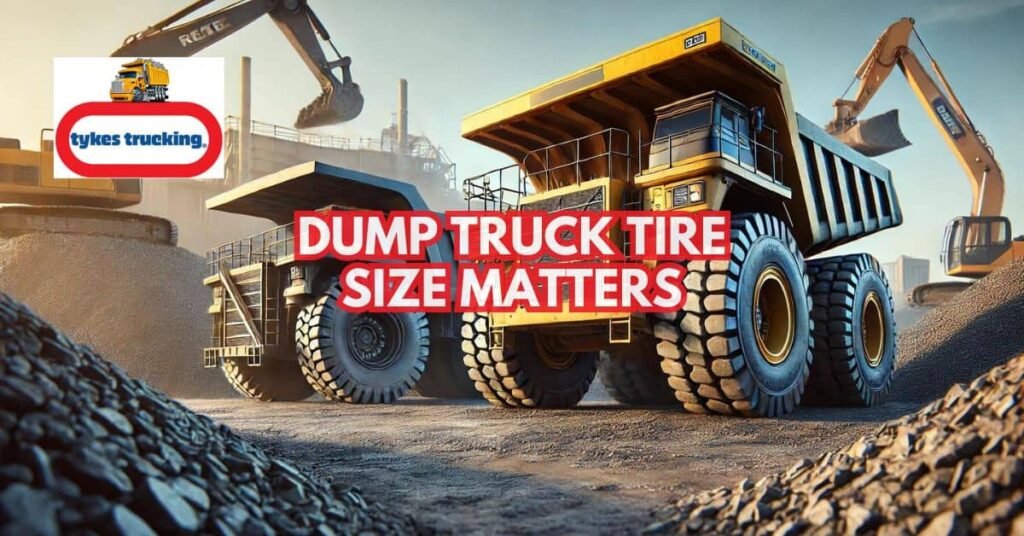
5. Fuel Efficiency: The Link Between Tire Size and Costs
The size of dump truck tires directly impacts fuel efficiency, influencing overall operational costs.
Larger tires often have higher rolling resistance, which can increase fuel consumption.
However, they may also allow for more efficient load distribution, which can mitigate some of these effects.
Selecting a tire size that balances these factors can lead to cost savings by optimizing fuel usage without compromising performance.
Monitoring tire performance and fuel consumption is essential to identifying the most economical tire size for your specific operations.
🚚 What Are the Safety Considerations for Dump Truck Gravel Delivery?
6. Ride Quality: A Smoother Operation with the Right Tires
The right tire size can greatly enhance ride quality by absorbing road vibrations and shocks more effectively.
Larger tires can offer a smoother ride, which reduces driver fatigue and increases comfort during long hauls.
Improved ride quality also lessens wear and tear on the vehicle’s suspension system, leading to lower maintenance costs over time.
Additionally, smoother operation ensures that sensitive cargo is transported safely and without damage.
Selecting the proper tire size is key to achieving the optimal balance between comfort and performance.
🚚 Why Dump Truck Debris Removal Is Essential for Safe Roadwork Projects
7. Upfront Investment: The Price Tag of Different Tire Sizes
Tire size is a significant factor in the initial cost of equipping a dump truck.
Larger tires typically cost more due to the additional materials and manufacturing processes involved.
However, the higher upfront investment can often be justified by the potential for improved performance and longevity.
Carefully evaluating the cost-benefit ratio of different tire sizes can help fleet managers make informed financial decisions.
Investing in the right tire size can lead to long-term savings and enhanced operational efficiency.
🚚 Why Safety Matters When Using Dump Trucks For Construction Hauling
8. Tire Lifespan: Maximizing Your Return on Investment
The lifespan of dump truck tires is influenced by their size, with larger tires often providing longer service due to better load distribution.
Properly maintained, larger tires can withstand more wear and tear, reducing the frequency of replacements.
Selecting the right tire size and maintaining it correctly maximizes the return on investment by extending the tire’s useful life.
Regular inspections and proper inflation are crucial to ensuring that tires perform optimally and last as long as possible.
This approach not only saves money but also ensures consistent performance and safety.
🚚 Conquering Your Construction Project: The Essential Guide to Construction Hauling Services
9. Fuel Costs: The Bottom Line Impact of Tire Size
Tire size plays a critical role in determining the overall fuel costs for dump truck operations.
Larger tires may increase fuel consumption due to higher rolling resistance, but they can also improve load distribution and stability.
This trade-off requires careful analysis to determine which tire size offers the best balance between performance and fuel efficiency.
Monitoring and adjusting tire sizes based on specific route conditions and payloads can lead to significant savings in fuel costs.
Effective tire management is essential for optimizing expenses and maintaining profitability in dump truck operations.
🚚 Millimeters Matter: The Importance of Garbage Truck Turning Radius in Tight Streets
10. Downtime and Productivity: The Cost of Tire Failures
Tire failures can cause unexpected downtime and disrupt productivity, leading to significant financial losses.
Larger tires, when properly maintained, often have a lower risk of blowouts and other failures due to their robust construction.
Selecting the right tire size and ensuring regular maintenance can minimize the risk of tire-related issues.
Reduced downtime translates to more consistent operations and improved productivity, directly impacting the bottom line.
Preventive measures and timely interventions are key to maintaining high levels of productivity and efficiency.
🚚 Hauling Services Using Dump Trucks
11. Legal and Regulatory Compliance: Staying on the Right Track
Compliance with legal and regulatory standards is vital when selecting dump truck tires.
Different regions have specific rules regarding tire sizes and load capacities, which must be adhered to to avoid fines and operational interruptions.
Choosing the correct tire size ensures that your dump truck remains compliant with these regulations, preventing costly penalties.
Understanding and staying updated on regional regulations is crucial for seamless operations and maintaining a good standing in the industry.
Compliance not only avoids legal issues but also promotes safe and efficient transportation practices.
🚚 Skilled Dump Truck Services in Marikina City
💡 Conclusion
Selecting the appropriate dump truck tire size is a strategic decision that impacts performance, costs, and compliance.
By carefully considering factors such as load capacity, fuel efficiency, ride quality, and regulatory requirements, operators can make informed decisions that enhance their fleet’s effectiveness.
Investing in the right tire size not only improves operational performance but also leads to long-term cost savings.
Understanding tire specifications and maintaining them properly is essential for maximizing the benefits of your investment.
Thoughtful tire size selection and management are key to achieving optimal performance and cost efficiency in dump truck operations.
😉 Our Services
Tykes Trucking Services offers reliable aggregate delivery and hauling services tailored to meet your needs.
Our team is committed to providing efficient and timely service to ensure your projects run smoothly.
With a fleet of well-maintained trucks, we can handle any size load with ease and professionalism.
Contact us today at 09175435019, via our Facebook page, or through our website’s contact form to learn more about how we can assist you.
Trust Tykes Trucking Services for all your hauling and aggregate delivery needs.
❓ FAQs
1. How do I know which dump truck tire size is right for my truck?
The best tire size depends on your truck’s load capacity, the type of ground you drive on, and your fuel budget.
You should always check the manufacturer’s guide for recommended tire sizes.
Think about whether your work is on smooth city roads, rough construction sites, or mining areas.
Matching tire size to your daily work will give you the best balance of safety, cost, and performance.
2. Do larger dump truck tires always last longer?
Larger tires can last longer because they spread weight more evenly and handle heavy loads better.
However, their lifespan still depends on proper care, correct inflation, and regular inspections.
If large tires are used in the wrong setting, they may wear out quickly.
Good maintenance is just as important as tire size for long service life.
3. How does tire size affect fuel costs?
Bigger tires often create more rolling resistance, which can increase fuel use.
But they can also carry more weight at once and reduce the number of trips needed.
Smaller tires may use less fuel but might wear out faster under heavy loads.
Choosing the right balance for your type of work can lower fuel costs in the long run.
4. Can using the wrong tire size cause safety issues?
Yes, the wrong tire size can lead to poor grip, longer braking distances, or even blowouts.
Tires that are too small may not carry the load safely, while oversized tires may strain the suspension or brakes.
Unsafe tires put the driver, cargo, and other road users at risk.
Always choose a tire size that meets both legal standards and operational needs.
5. What is the most cost-effective way to manage dump truck tires?
The most cost-effective approach is to pick the correct tire size for your work conditions and maintain it properly.
Regular checks for air pressure, tread wear, and damage will extend tire life.
Retreading larger tires when possible can also save money compared to buying new ones.
By planning ahead and keeping tires in good condition, you can reduce downtime and overall expenses.