

Can truck drivers have passengers?
This question is not as simple as it seems.
The answer depends on federal rules, company policies, and the personal choices of each driver.
Allowing a passenger can bring both benefits and challenges, from companionship on long trips to added safety concerns.
Drivers must also think about how passengers affect comfort, health, and daily routines inside the truck.
Understanding these factors helps drivers make safe and informed decisions before inviting someone to ride along.
1. Lonesome on the Long Haul: Can Truck Drivers Bring Passengers Along?
For many truckers, the isolation of long-haul truck driving can be overwhelming, with long hours spent alone behind the wheel of a commercial vehicle.
Having a passenger can provide companionship, helping to ease loneliness and giving the driver someone to talk to during the journey.
Passengers can also help break up the routine of driving by assisting with simple tasks such as reading directions or organizing paperwork.
However, whether a trucker can bring a passenger depends on rules set by the company as well as state and federal regulations.
Many motor carriers require truckers to get written authorization before a passenger can join them on the road.
This authorization makes sure that both the driver and the passenger are covered by insurance and other legal protections.
Without proper approval, the driver could face penalties and risk losing their job.
Because of these risks, it is important for anyone in truck driving to confirm passenger rules with their employer and carefully follow all required procedures.
🚚 The Vital Role of Refrigerated Trucking Services
2. DOT Regulations or Company Rules: Who Decides on Truck Driver Passengers?
The Department of Transportation (DOT) sets basic guidelines for commercial driving, including rules about carrying passengers.
However, each carrier may impose stricter policies on its drivers, often exceeding DOT standards.
Before a truck driver can bring a passenger, they must usually obtain a waiver or written permission from their employer, ensuring that the passenger is allowed under both federal law and company policy.
Failing to do so could result in serious consequences, such as penalties for having an unauthorized passenger.
Additionally, some carriers may require the driver to complete extra safety training or meet insurance requirements before a passenger is allowed.
This ensures that any risks are minimized and that all involved parties are protected.
Understanding these layers of regulations helps drivers stay compliant and avoid potential complications during their trip.
🚚 Flatbed Truck Ladder Safety Tips for Professionals and DIYers
3. Friend, Family, or Forbidden? Understanding Company Rider Policies
Company rider policies can differ widely depending on the trucking company and its specific rules.
Some companies allow drivers to bring family members, such as a spouse or child, while others may limit this privilege to certain times of the year or certain trip types.
A few companies may forbid passengers altogether because of liability concerns or the cost of meeting safety standards.
These policies often connect to insurance policies, since companies must ensure that passengers are legally protected in case of accidents or injuries.
Drivers are responsible for understanding the exact requirements of their employer before planning to take anyone on the road.
Following these rules not only keeps the driver in good standing but also protects the company and ensures the well-being of both driver and passenger.
🚚 Are Dump Trucks Automatic, and What Does it Mean?
4. Safety First: Keeping Passengers Secure in a Commercial Vehicle
Ensuring passenger safety is paramount when they are allowed in a commercial vehicle.
Drivers must ensure that all passengers use seatbelts and adhere to safety protocols specific to the vehicle and cargo.
This is particularly important in vehicles carrying hazardous materials, where additional precautions may be necessary.
Trucking companies often provide guidelines or training on how to manage the presence of passengers safely.
By following these guidelines, drivers help prevent accidents and ensure that both their passengers and themselves are safe throughout the journey.
🚚 Essential Recovery Truck Accessories for Every Roadside Rescue
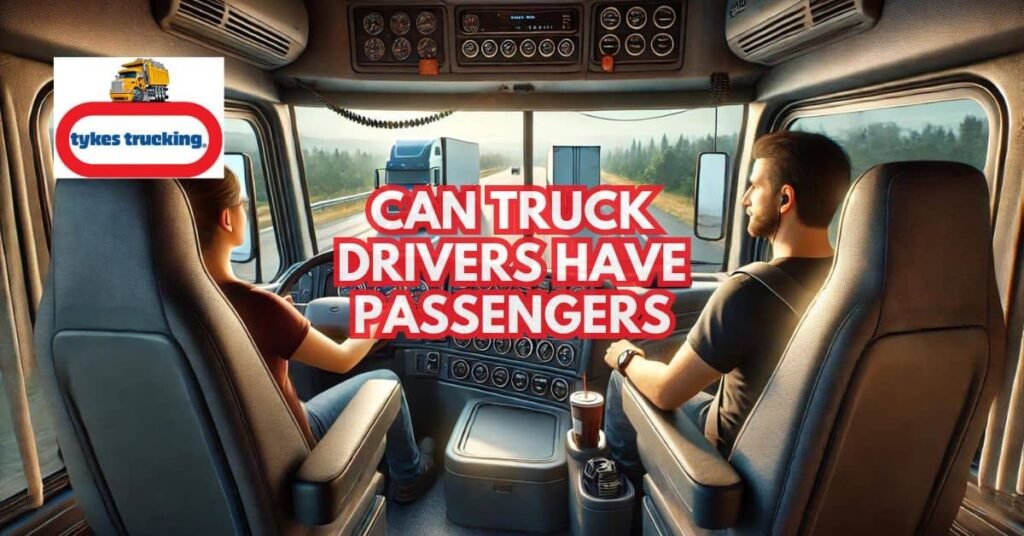
5. Sharing the Ride: Who Can Be a Passenger in a Truck?
The eligibility of passengers in commercial trucks is usually set by the trucking company’s official policies.
In many cases, companies only allow one passenger at a time to limit risks and make safety easier to manage.
Family members, such as a spouse or child, are the most common passengers, though some companies also permit friends or business partners under specific conditions.
Age restrictions are often in place, and younger riders may not be approved unless extra safety measures are followed.
Drivers must review these policies carefully and request permission so that both the company and the passenger are fully protected.
By ensuring that rules are followed, drivers can travel with confidence while keeping their trips in line with company standards and the law.
🚚 Dirt Hauling Services: Essential for Construction and Landscaping
6. Health and Lifestyle Challenges for Passengers
Riding in a truck for long hours can make passengers feel tired and cramped.
The small space gives little room to move around, which may cause discomfort or health problems.
Passengers may also find it hard to adjust to unusual sleep schedules that come with long trips.
Eating well and staying clean can be difficult on the road since food and bathroom options are limited.
These challenges can make trucking tough for passengers, especially for children or older adults.
🚚 Maximizing Your Dump Truck Load Capacity: Tips and Tricks
7. Combating Loneliness and Sharing Duties: The Perks of Having a Passenger
Having a passenger can be very beneficial for truck drivers, especially on long hauls where days are spent away from home.
Companions help reduce the loneliness that often comes with long-distance trucking by providing conversation and emotional support.
In addition to the company, passengers can assist with tasks such as reading maps, handling paperwork, or answering calls, which reduces pressure on the driver.
This type of support can improve trip efficiency and make the overall experience smoother for everyone involved.
Within the trucking industry, many drivers view passengers as a practical way to balance work demands with personal well-being.
Having someone to share the trip with not only boosts mood and alertness but also creates a safer and more positive environment inside the truck.
🚚 Mastering the Dump Truck Automatic Transmission
8. Cramped Quarters and Divided Focus: Potential Drawbacks of Truck Passengers
While there are advantages to having passengers, there are also significant drawbacks to consider.
The confined space of a truck cabin can become uncomfortable for both the driver and the passenger during long trips.
Having another person in the vehicle can also potentially distract the driver, which might increase the risk of accidents.
Furthermore, managing interpersonal dynamics in such close quarters can be challenging and may lead to tension or conflicts.
Drivers need to weigh these potential issues carefully when deciding whether to have a passenger.
🚚 Why Commercial Dump Truck Hauling Is Essential for Large-Scale Earthmoving
9. Passenger Behavior and Etiquette: Ensuring a Smooth Journey
Passenger behavior and etiquette play a significant role in ensuring a smooth and safe journey for everyone.
Passengers should refrain from loud conversations or playing music without headphones, as this can easily distract the driver.
It’s also important to maintain cleanliness in the truck, avoiding littering or leaving personal items scattered around.
Respecting the driver’s personal space by keeping movements and interactions minimal helps the driver stay focused on the road.
Moreover, following any specific rules set by the driver, such as seatbelt use or phone restrictions, ensures a safer experience for all.
🚚 How to Choose the Right Dump Trucks for Residential Construction for Your Site
10. Finding Support on the Road: Alternatives to Passengers for Truck Drivers
For truck drivers who cannot have passengers or prefer solitude, there are other ways to find support and companionship on the road.
Technology plays a key role, as drivers can stay connected with family and friends through calls, texts, and video chats.
Truck stops and driver networks also provide opportunities for social interaction with peers who understand the unique challenges of trucking.
Some drivers find solace in podcasts or audiobooks, which can provide entertainment and education without the need for actual company.
These alternatives can help maintain mental well-being during long, solitary drives.
🚚 Dump Truck Tire Size Matters: Impact on Performance and Cost
11. Clear Communication is Key: Setting Expectations for Passengers in a Truck
When passengers are allowed, clear and upfront communication about the journey’s expectations is crucial.
Drivers should discuss the trip’s duration, rules regarding rest stops, and responsibilities within the cab beforehand.
It’s important to establish boundaries regarding personal space and duties to prevent any miscommunications or discomfort during the trip.
Setting these expectations helps ensure that the experience is positive for both the driver and the passenger.
This proactive communication can prevent potential conflicts and ensure a harmonious travel environment.
🚚 Aggregate Transport Services with Dump Trucks
12. To Ride or Not to Ride? Weighing the Pros and Cons of Truck Driver Passengers
Deciding whether to have a passenger involves careful consideration of various factors.
The benefits include companionship, shared responsibilities, and enhanced safety through active monitoring and support.
However, drawbacks such as potential distractions, reduced personal space, and the complexities of managing another person in a confined space can outweigh the positives for some drivers.
Each driver must evaluate their own preferences, the specific trip conditions, and company policies to make this decision.
Weighing these pros and cons helps drivers make choices that best suit their personal and professional needs.
🚚 Affordable Dump Truck Services Marikina
💡 Conclusion
Ultimately, the decision on whether truck drivers can have passengers is influenced by a combination of regulatory, company, and personal factors.
Drivers must be thoroughly informed about the relevant laws and company policies while considering their own comfort and the practicalities of the journey.
By understanding and navigating these complexities, drivers can make informed decisions that enhance their driving experience and maintain compliance with all necessary regulations.
Making the right choice about passengers can significantly impact a driver’s life on the road, both positively and negatively.
😉 Our Services
Looking for reliable aggregate delivery and hauling services?
Tykes Trucking Services has you covered!
With a commitment to timely and safe delivery, we’re the go-to for all your hauling needs.
Contact us today at 09175435019, visit our Facebook page, or use the contact form on our website to get a quote or learn more about our services.
Let Tykes Trucking Services help you move forward with confidence!
❓ FAQs
1. Do truck drivers need permission to bring a passenger?
Yes, most truck drivers need written permission from their company before carrying a passenger.
This ensures that both the driver and the passenger are covered by insurance and that company rules are followed.
Without permission, the driver may face penalties.
2. Can children ride as passengers in trucks?
Some companies allow children to ride, but there are usually age restrictions and extra safety requirements.
Children must always wear seatbelts and follow safety rules.
Parents who are drivers should check with their company before planning a trip with kids.
3. What safety steps should passengers follow in a truck?
Passengers should always wear a seatbelt, keep the cab clean, and avoid distracting the driver.
They should also respect the driver’s rest schedule and personal space.
These simple steps help keep everyone safe during the trip.
4. Are passengers covered by insurance in case of an accident?
Passengers are usually covered if the driver has company approval for them to ride.
If the passenger is not authorized, insurance may not cover injuries or damages.
This is why written approval is so important.
5. What are the alternatives for drivers who cannot bring passengers?
Drivers can stay connected with family through phone calls and video chats.
They can also use podcasts, audiobooks, or online groups to reduce loneliness.
Truck stops and driver networks provide good chances for social interaction on the road.