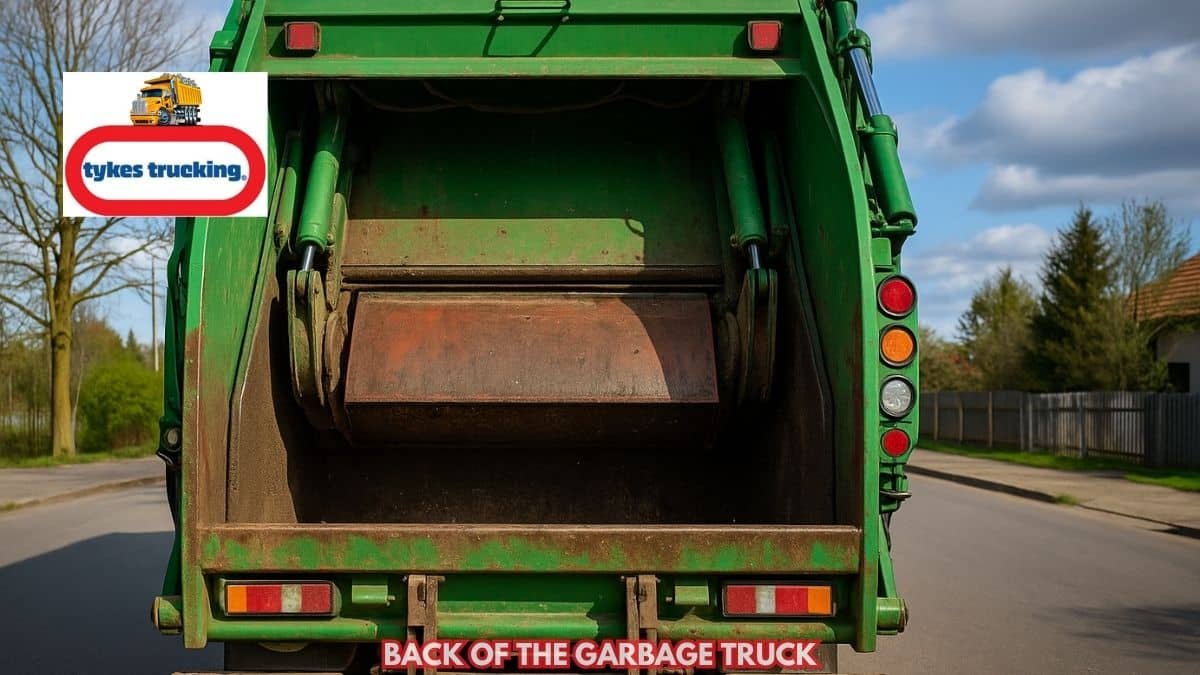
The back of the garbage truck holds the main machines that collect, move, and compress waste.
It brings together the hopper, compactor, hydraulic parts, and control systems that help the truck handle large amounts of trash in a short time.
These tools work together so trash can be loaded safely and stored in a smaller space during each route.
By understanding what happens in this area, we can see why garbage trucks can support daily waste collection in busy cities.
Learning how these parts operate also helps us appreciate how much planning goes into keeping communities clean.
1. Overview of Garbage Truck Design: The Importance of the Rear Compartment
The rear compartment is the main area where trash is collected, stored, and shaped through compaction so it can be moved safely.
It is built to hold large amounts of waste, and its structure uses strong metal parts that keep the load stable during each route.
This section often includes a large plate that presses trash into a smaller size so the truck can carry more before reaching a disposal site.
The rear doors usually open on a sturdy hinge that allows workers to empty the truck without damaging the frame.
These features work together to manage heavy waste and prevent spills while the truck is moving.
The strong design also helps the rear compartment handle the pressure created during compaction.
Because most of the truck’s waste handling happens in this area, it must be built to resist long hours of use.
Without this specialized design, the garbage truck would need more trips to unload, which would slow down the entire collection process.
🚚 How to Choose the Right Reefer Truck Rental for Your Needs
2. Exploring Different Types of Rear-Loading Mechanisms
Rear-loading mechanisms vary depending on the type of truck and the waste being handled.
Some garbage trucks have manual loaders where workers physically throw trash into the hopper, while others use automated arms or lifting devices to handle large bins.
Certain trucks are designed for specific waste types, such as construction debris or organic waste, each using a different loading method.
These variations ensure that garbage trucks can meet the demands of different urban environments and waste management needs.
The choice of mechanism impacts the speed, safety, and overall efficiency of the waste collection process.
🚚 How Does Dump Truck Exhaust Affect Air Quality On Construction Sites?
3. The Compactor’s Role: Maximizing Space in Waste Collection
The compactor at the back of the garbage truck uses a strong plate to press trash into a smaller and tighter shape.
After the trash moves from the hopper into the compactor, the plate pushes the waste forward to make more room for new loads.
This process lets the truck carry larger amounts of trash before it needs to unload at a disposal site.
The reduced size of the trash also helps control smells because there is less open space for odors to escape.
It can limit pests from reaching the waste during transport.
By using this system, the truck can collect more trash in less time and help lower the strain on waste facilities.
🚚 Heavy Hauling Services in Marikina: What You Need to Know Before Hiring
4. Understanding the Functionality of the Hopper
The hopper is the section of the garbage truck where waste is initially loaded.
It acts as a temporary storage area before the compactor pushes the trash into the main compartment.
The hopper is designed to hold varying amounts of waste based on the truck’s capacity and collection method.
Its construction is crucial for preventing spillage and managing the flow of trash into the compactor.
A well-functioning hopper ensures that waste collection is smooth and that trash is loaded quickly and efficiently.
🚚 How to Come Up with Catchy Dump Truck Names for Your New Rig
5. How Hydraulic Systems Power the Back of Garbage Trucks
Hydraulic systems give the back of a garbage truck the strength it needs to lift bins and move heavy trash.
These systems use pressurized fluid to help parts swing, push, and pull in a steady and controlled way.
When the cylinders extend or retract, they guide the compactor and lifting arms so workers do not have to apply physical force.
Pumps supply the fluid that keeps the cylinders and valves moving during each collection stop.
Because these parts work under high pressure, they must be checked often to prevent leaks or slow movement.
Regular maintenance keeps the hydraulic system strong so the truck can perform every task safely and on time.
🚚 The Essential Guide to Tank Truck Loading Gantries: Ensuring Safe and Efficient Tank Truck Loading
6. Control Systems and Rear Operator Controls
The back of a garbage truck has simple control panels that let workers manage the hopper, compactor, and lifting parts with clear buttons and switches.
Many trucks include labels or a sign near each control so workers know exactly what each part does before they use it.
These panels often use joysticks that let workers guide the movement of the machines in a slow and steady way.
Interlock systems make sure the truck does not move certain parts unless the brakes are set and the tailgate is fully secure.
Some trucks also have controls inside the cab so the driver can operate the rear systems when no one is standing behind the truck.
Together, these controls help workers handle each part of the collection process in a safe and organized manner.
🚚 How to Choose the Right Dump Truck Hauling Services in Marikina for Your Needs
7. Safety Features for Sanitation Workers: Protecting Lives at the Back
The back of a garbage truck can be a hazardous place for sanitation workers, which is why safety features are essential.
Automatic shut-off systems, safety rails, and warning alarms are built into modern trucks to prevent accidents.
Additionally, sensors can detect when a worker is too close to the compactor or lifting mechanisms, pausing the operation until it’s safe to resume.
Proper lighting at the rear also helps workers operate in low-visibility conditions.
These safety features protect workers while enabling them to perform their duties effectively.
🚚 Understanding Tank Truck Hoses: Types, Uses, and Maintenance
8. Waste Separation and Recycling: Innovations at the Back of the Truck
Innovations in waste separation and recycling are now being integrated into the back of some garbage trucks.
These trucks can have built-in compartments or automated systems that sort recyclables from general waste at the collection point.
This saves time and resources, reducing the need for separate recycling runs and improving overall recycling rates.
Some trucks are equipped with sensors that can identify different types of materials, sorting them as they are loaded.
These technologies represent a significant step toward more sustainable waste management practices.
🚚 How to Choose a 26-Foot Flatbed Trailer for Your Business
9. Common Maintenance Challenges for Rear Mechanisms
The rear mechanisms of a garbage truck, including the compactor, hydraulic systems, and hopper, face constant stress from daily operations.
Wear and tear on these components is common, leading to potential hydraulic leaks, malfunctioning compactors, or misaligned loading arms.
Regular maintenance is required to prevent breakdowns, which could disrupt waste collection services.
Components like seals, valves, and hydraulic lines are especially prone to damage from debris or extreme weather conditions.
Addressing these challenges promptly helps extend the truck’s operational life and ensures continuous efficiency.
🚚 Reefer Container Troubleshooting: A Cool Guide to Keeping Your Cargo Fresh
10. The Impact of Garbage Truck Design on Urban Waste Management
Garbage truck design directly affects how fast and safely waste can be collected in busy cities.
A truck that can carry more trash before it needs to empty its load helps reduce trips to the landfill or transfer station, which saves time and fuel.
Larger compactors and smarter loading systems allow workers to move trash quickly, even when the waste includes heavy or bulky items.
Some cities use roll-off containers that let trucks switch full bins with empty ones to keep routes moving without long delays.
These features help reduce traffic problems because trucks spend less time stopped on crowded streets.
A strong design also helps the truck handle different waste types without slowing the collection process.
When trucks are built to work well in tight spaces, they create fewer disruptions for drivers and pedestrians.
By improving these design choices, cities can manage waste more smoothly while also reducing the impact on the environment.
11. Future Innovations: Enhancing the Back of Garbage Trucks
As technology advances, the back of garbage trucks is becoming more automated and efficient.
Innovations like smart sensors, which detect the amount and type of waste, allow for more accurate sorting and compacting.
Fully electric trucks are also on the horizon, reducing both noise pollution and carbon emissions.
Automated loading systems could further reduce the need for manual labor, improving both efficiency and safety.
These innovations aim to make waste collection more sustainable and adaptable to the evolving needs of cities.
🚚 Bulk Hauling Dump Truck Rentals in Marikina City
💡 Conclusion
The machinery at the back of the garbage truck may seem simple, but it involves a series of carefully designed components that work together to ensure efficient waste collection.
From the hopper to the hydraulic systems, each part plays a crucial role in managing waste and keeping urban environments clean.
These mechanisms have been fine-tuned over the years to enhance safety, efficiency, and environmental sustainability.
Understanding the complexity of this machinery gives us a deeper appreciation of the daily waste collection process.
As innovations continue, garbage trucks will become even more effective in supporting modern waste management.
❓ FAQs
1. What happens to the trash after it enters the hopper?
Once trash enters the hopper, it waits there until the compactor pushes it into the main compartment.
The compactor presses the trash to make it smaller so the truck can hold more.
This process helps the truck collect waste faster during each route.
2. Why do garbage trucks use hydraulic systems?
Hydraulic systems give the truck the power to lift heavy loads and run the compactor.
They use pressurized fluid to move parts that workers could not move by hand.
Without hydraulics, the truck would not be able to handle large amounts of trash.
3. How do sanitation workers stay safe at the back of the truck?
Modern trucks have safety rails, warning alarms, and automatic shut-off systems that stop the machines if something is wrong.
Some trucks also use sensors to detect when a worker is too close to moving parts.
These features help workers stay safe while they load trash.
4. Why is the compactor important for waste collection?
The compactor reduces the size of the trash so the truck can carry more before unloading.
This saves time because the truck makes fewer trips to the disposal site.
It also helps keep odors and loose waste from escaping during transport.
5. What new technologies are being added to the back of garbage trucks?
Some trucks now use smart sensors that can detect the type or amount of waste.
Other trucks have systems that sort recyclables as they are loaded.
These new tools help cities manage waste more cleanly and efficiently.
😉 Our Services
Tykes Trucking Services specializes in delivering aggregates and providing reliable hauling services for your project needs.
Whether you need sand, gravel, or other materials, we ensure fast and efficient delivery right to your site.
Our team is committed to providing top-notch service with a focus on customer satisfaction.
For inquiries or bookings, you can reach us at 0917-543-5019, via our Facebook page, or through the contact form on our website.
Let Tykes Trucking Services handle your hauling needs with professionalism and care.